If you’ve ever spent an hour creating what you thought was the perfect Instagram post or LinkedIn update—only to get a handful of likes and maybe one comment from your best friend—you’re definitely not alone.
I’ve been there myself.
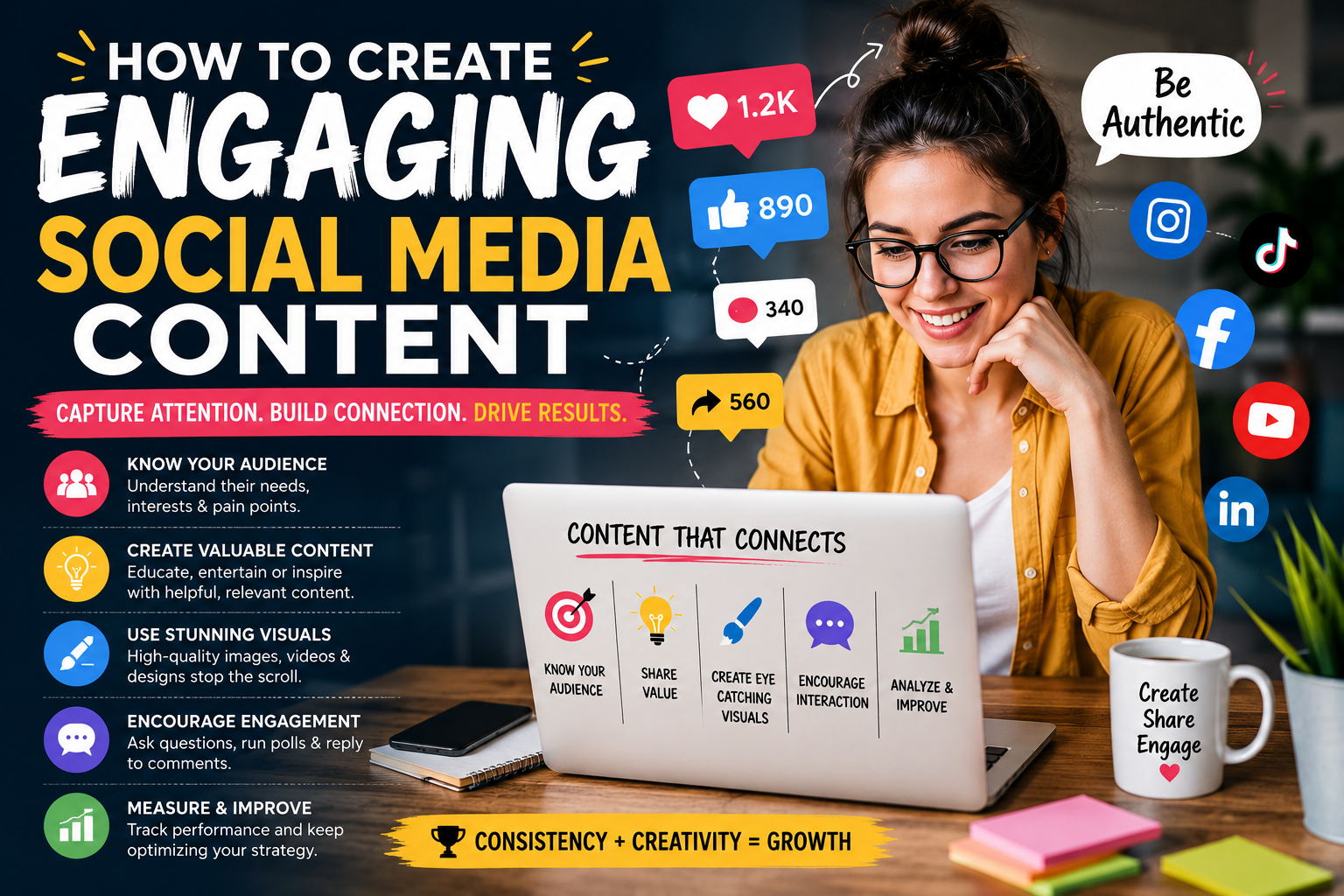
When I first started creating content for social media, I believed success depended on beautiful graphics and clever captions. While those certainly help, I quickly discovered that engagement comes from something much deeper: understanding your audience and consistently providing value.
One statistic that always stands out is that billions of people use social media every day across platforms like Instagram, Facebook, TikTok, LinkedIn, YouTube, Pinterest, and X (formerly Twitter). Yet only a small percentage of posts generate meaningful engagement because users scroll through an overwhelming amount of content every minute.
In my experience, creating engaging social media content isn’t about chasing every trend—it’s about creating posts that make people stop scrolling, think, smile, learn something new, or join the conversation.
In this guide, I’ll walk you through proven strategies I’ve researched and applied, common mistakes to avoid, useful tools, and actionable tips that can help you create content people actually want to interact with.
Why Engaging Social Media Content Matters
Likes are nice.
Comments are better.
Shares and saves are even better.
But true engagement goes beyond numbers.
Engaging content helps you:
- Build trust with your audience
- Increase brand awareness
- Improve organic reach
- Strengthen customer relationships
- Generate leads
- Drive website traffic
- Increase conversions
- Build a loyal community
Most social media algorithms reward content that keeps users interacting longer, making engagement one of the biggest factors in visibility.
See More: How to Create a Social Media Content Calendar
What Makes Social Media Content Engaging?
One lesson I learned early was that people rarely engage with content simply because it’s well-designed.
They engage because it makes them feel something.
Great social media content usually does one or more of the following:
- Educates
- Entertains
- Inspires
- Solves a problem
- Starts conversations
- Tells relatable stories
- Makes people laugh
- Encourages action
If your audience can say, “That’s exactly what I needed,” you’re already ahead of many creators.
Know Your Audience Before You Create Anything
One of my biggest mistakes was creating content I personally liked instead of content my audience actually wanted.
Everything changed once I started asking questions like:
- Who am I speaking to?
- What challenges do they face?
- What are they searching for?
- What would make them stop scrolling?
For example:
A fitness coach attracts a different audience than a digital marketer.
A local bakery creates different content than a SaaS company.
Understanding your audience shapes everything from visuals to captions.
Types of Engaging Social Media Content
Variety keeps your feed interesting.
Here are some of the most effective content formats.
Educational Content
Teach something valuable.
Examples include:
- How-to guides
- Quick tutorials
- Tips
- Industry insights
- Mistake breakdowns
Educational posts often receive saves because people want to revisit them later.
Storytelling Posts
Stories create emotional connections.
Instead of saying:
“Our product improved productivity.”
Try:
“Last year, I spent hours manually scheduling posts. After switching to a content calendar, I finally had weekends back.”
Stories make information memorable.
Behind-the-Scenes Content
People enjoy seeing the human side of businesses.
Show:
- Your workspace
- Team meetings
- Product creation
- Daily routine
- Challenges
- Wins
Authenticity often outperforms perfection.
User-Generated Content
Encourage customers to share photos, reviews, and experiences.
This builds trust because recommendations from real users feel more authentic than advertisements.
Interactive Content
Invite participation through:
- Polls
- Quizzes
- Questions
- Challenges
- “This or That” choices
- Contests
The easier it is to participate, the higher the engagement tends to beHow to Create Engaging Social Media Content Step by Step
Step 1: Start with One Goal
Every post should have one primary objective.
For example:
- Increase awareness
- Generate comments
- Drive traffic
- Educate followers
- Sell a product
Trying to accomplish everything in one post usually weakens the message.
Step 2: Write a Strong Hook
The first few seconds determine whether someone keeps scrolling.
Strong hooks include:
- Questions
- Surprising facts
- Common mistakes
- Bold statements
- Personal stories
For example:
“I wasted six months posting every day before I realized I was making one simple mistake.”
That instantly creates curiosity.
Step 3: Deliver Real Value
Avoid filler.
Instead, answer questions your audience is already asking.
Whenever I create content, I ask myself:
“Would I save this post if someone else shared it?”
If the answer is no, I rewrite it.
Step 4: Use High-Quality Visuals
People notice visuals before they read captions.
You don’t need expensive equipment.
Many successful creators use:
- Canva
- Adobe Express
- CapCut
- Figma
- Adobe Photoshop
Simple, clean designs often outperform cluttered graphics.
Step 5: Include a Clear Call to Action
Never assume people know what to do next.
Examples include:
- Share your thoughts.
- Save this post.
- Tag a friend.
- Follow for more tips.
- Visit the link in bio.
Small prompts often increase engagement significantly.
Best Tools for Creating Social Media Content
Over time, I’ve experimented with dozens of content tools.
These are the ones I keep returning to.
Canva
Perfect for beginners and professionals alike.
Ideal for:
- Posts
- Stories
- Infographics
- Carousels
- Presentations
Adobe Express
Excellent for quick branding and polished visuals.
CapCut
One of my favorite video editing apps.
Easy enough for beginners while offering advanced features.
Buffer
Great for scheduling posts across multiple platforms.
Hootsuite
Useful for larger businesses managing several social accounts.
Notion
I personally enjoy organizing content ideas in Notion.
Having an organized content calendar dramatically reduces creative burnout.
Common Mistakes That Reduce Engagement
Even experienced creators make mistakes.
Here are some I’ve learned to avoid.
Posting Without a Strategy
Random content rarely builds momentum.
Planning ahead makes a huge difference.
Ignoring Comments
Social media is a conversation.
Responding to comments encourages more interaction.
Over-Promoting Products
Nobody enjoys following an endless advertisement.
A helpful rule is to educate far more often than you sell.
Chasing Every Trend
Not every viral trend fits your brand.
It’s okay to skip trends that don’t align with your audience.
Inconsistent Posting
Consistency builds familiarity.
Even posting three quality updates each week is better than posting daily for one week and disappearing for a month.
My Personal Experience Creating Better Content
I was skeptical at first, but creating a simple content calendar completely changed my workflow.
Instead of scrambling for ideas every morning, I began planning themes, captions, and visuals in advance.
My biggest concern was running out of ideas, but once I started documenting everyday questions from clients and readers, content ideas practically created themselves.
One unexpected lesson was realizing that my “perfect” posts weren’t always the best performers.
Some of my highest-engagement content came from casual stories, quick tips, or lessons learned from mistakes.
That reminded me that authenticity often beats perfection.
Measuring Your Success
Creating content is only half the process.
Track metrics like:
- Engagement rate
- Reach
- Shares
- Saves
- Comments
- Click-through rate
- Watch time
- Profile visits
These insights reveal what your audience actually enjoys.
Over time, you’ll notice patterns that make future content even stronger.
Quick Tips for More Engagement
- Post consistently instead of constantly.
- Use storytelling whenever possible.
- Ask questions at the end of captions.
- Mix educational and entertaining content.
- Respond to comments quickly.
- Keep captions easy to read.
- Experiment with videos and carousels.
- Repurpose your best-performing posts.
- Focus on helping before selling.
Frequently Asked Questions
What type of social media content gets the most engagement?
Educational content, short-form videos, relatable stories, behind-the-scenes posts, and interactive content like polls and questions consistently perform well because they encourage users to participate or save the content for later.
How often should I post on social media?
Quality is more important than quantity. For most creators and businesses, posting three to five times per week with consistent value is often more effective than posting multiple low-quality updates every day.
What is the biggest mistake people make with social media content?
One of the biggest mistakes is creating content without understanding the target audience. Posts that focus on audience needs, questions, and interests generally outperform content that only promotes products or services.
Final Thoughts
Creating engaging social media content isn’t about having the biggest budget, the fanciest camera, or the most followers. It’s about understanding your audience, sharing genuine value, and showing up consistently with content that informs, entertains, or inspires.
From my own experience, the biggest improvements came when I stopped trying to impress everyone and started focusing on helping a specific audience solve real problems. That shift not only improved engagement but also made content creation much more enjoyable.
Remember that every successful creator started somewhere. Experiment with different formats, pay attention to what resonates, and don’t be discouraged if every post isn’t a viral hit. Social media success is built over time through consistency, creativity, and authentic connections.
Now I’d love to hear from you. What type of social media content has worked best for your brand or personal profile? Share your experiences, favorite tools, or biggest challenges in the comments—your insights might help someone else create their next great post.