
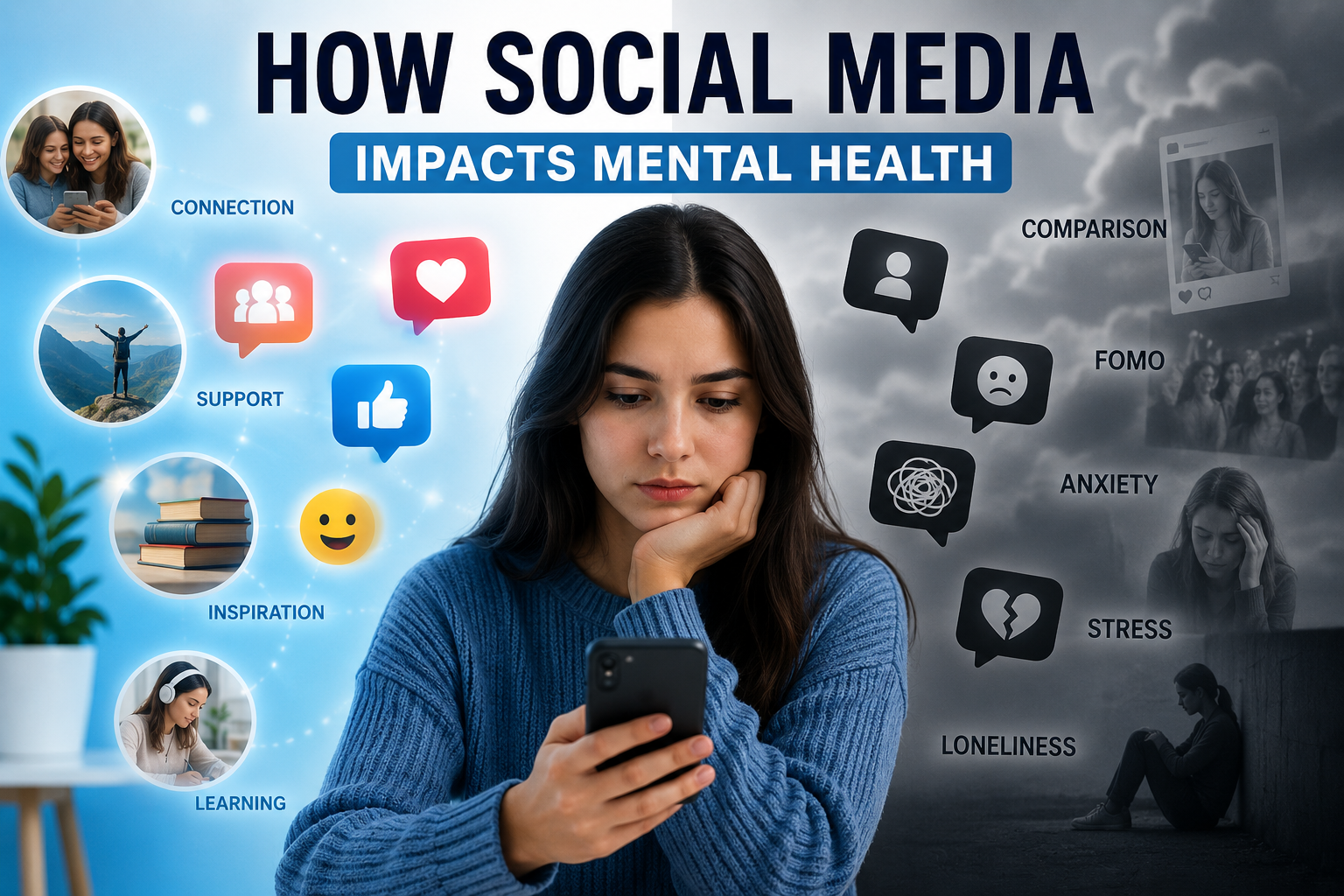
Social media has become part of almost every aspect of our daily lives. Whether it’s checking the latest news, sharing vacation photos, watching entertaining videos, or staying connected with friends and family, most of us spend several hours online every day. While these platforms have transformed communication in incredible ways, I’ve also noticed that they can quietly influence our emotions, confidence, and overall mental well-being.
In my experience, social media isn’t simply good or bad. Instead, its impact depends largely on how we use it. After spending years observing my own digital habits, reading psychological research, and talking with people who have experienced both positive and negative effects, I’ve learned that mindful use makes all the difference.
In this article, I’ll explore how social media impacts mental health, the benefits it offers, the risks we should understand, and practical ways to build a healthier relationship with technology.
Why Social Media Affects Mental Health
Humans naturally seek connection, acceptance, and belonging. Social media taps directly into these emotional needs by giving us instant access to conversations, communities, and feedback.
Every notification, comment, and “like” can trigger emotional responses. Sometimes those responses are positive, making us feel appreciated and connected. Other times, they create anxiety, comparison, or pressure.
Unlike traditional communication, social media is available 24 hours a day. This constant accessibility means our minds rarely get a true break unless we intentionally create one.
Read More: How Sleep Affects Your Mental Health
The Positive Effects of Social Media on Mental Health
Although discussions often focus on the negative side, social media also offers meaningful benefits when used responsibly.
1. Building Stronger Connections
One of the biggest advantages I’ve personally experienced is staying connected with people who live far away.
Friends, relatives, classmates, and coworkers can remain part of our lives regardless of distance.
These connections can reduce feelings of loneliness and strengthen relationships.
Benefits include:
- Regular communication with loved ones
- Joining communities with shared interests
- Emotional support during difficult times
- Networking opportunities
2. Access to Mental Health Education
Today, licensed therapists, psychologists, and wellness experts regularly share educational content online.
I’ve discovered valuable information about:
- Stress management
- Anxiety reduction
- Mindfulness
- Healthy coping strategies
- Self-care routines
While social media should never replace professional healthcare, it can increase awareness and encourage people to seek help.
3. Finding Supportive Communities
Many individuals struggle with challenges they feel nobody else understands.
Social media allows people experiencing similar situations to connect.
Examples include:
- Anxiety support groups
- Depression awareness communities
- Parenting groups
- Student communities
- Career development networks
Feeling understood can significantly improve emotional well-being.
4. Creative Expression
Social platforms encourage creativity.
Whether someone enjoys photography, writing, painting, cooking, or music, sharing creative work often builds confidence and motivation.
Personally, I’ve found that creating meaningful content feels much healthier than endlessly consuming other people’s posts.
The Negative Effects of Social Media on Mental Health
While social media offers benefits, excessive or unhealthy use can create several mental health challenges.
Let’s look at the most common ones.
1. Constant Comparison
One lesson I’ve learned is that social media often shows highlight reels—not everyday reality.
People usually post:
- Vacations
- Promotions
- Fitness achievements
- Perfect family moments
- Luxury purchases
Rarely do we see their struggles, failures, or difficult days.
When we compare our real life to someone else’s carefully selected moments, it becomes easy to feel inadequate.
Over time, this can lower self-esteem.
2. Anxiety and Fear of Missing Out (FOMO)
Scrolling through parties, vacations, and exciting events can create the feeling that everyone else is living a better life.
This experience, commonly known as FOMO (Fear of Missing Out), may lead to:
- Anxiety
- Restlessness
- Dissatisfaction
- Impulsive checking of social apps
I’ve noticed that taking regular breaks immediately reduces these feelings.
3. Sleep Problems
Many people scroll through social media just before bed.
I’ve done this myself and noticed how difficult it became to fall asleep afterward.
Reasons include:
- Blue light exposure
- Mental stimulation
- Emotional reactions to content
- Endless scrolling
Poor sleep affects:
- Mood
- Concentration
- Energy
- Emotional resilience
Creating a “phone-free bedtime” has made a noticeable difference in my daily focus.
4. Cyberbullying
Unlike traditional bullying, cyberbullying can happen at any time.
Negative comments, online harassment, and public criticism can seriously affect mental health.
Victims often experience:
- Anxiety
- Depression
- Social withdrawal
- Reduced confidence
Creating safer online spaces requires kindness from every user.
5. Social Media Addiction
Social platforms are intentionally designed to keep users engaged.
Infinite scrolling, personalized recommendations, and notifications encourage repeated checking.
Warning signs include:
- Feeling anxious without your phone
- Constantly refreshing feeds
- Losing track of time
- Ignoring responsibilities
- Difficulty focusing offline
When social media begins controlling daily life instead of supporting it, balance becomes necessary.
Signs That Social Media May Be Affecting Your Mental Health
Sometimes the effects develop gradually.
Watch for signs such as:
- Frequent mood swings after scrolling
- Comparing yourself to others daily
- Trouble sleeping
- Increased anxiety
- Feeling emotionally exhausted
- Reduced productivity
- Low self-esteem
- Constant need for online validation
Recognizing these patterns is the first step toward healthier habits.
Practical Tips for Using Social Media in a Healthier Way
Over time, I’ve experimented with several approaches that genuinely improved my relationship with social media.
Here are the strategies that worked best.
1. Set Daily Time Limits
Instead of checking social media throughout the day, choose specific times.
Even reducing screen time by 30–60 minutes daily can improve focus and emotional well-being.
2. Unfollow Negative Accounts
Not every account deserves your attention.
If certain pages consistently make you feel stressed, insecure, or overwhelmed, unfollow or mute them.
Replace them with content that educates, inspires, or genuinely entertains.
3. Create More Than You Consume
One lesson I’ve found valuable is shifting from passive scrolling to active participation.
Try:
- Writing thoughtful posts
- Sharing personal achievements
- Creating artwork
- Posting educational content
- Supporting others
Creating often feels far more rewarding than endless consumption.
4. Take Regular Digital Breaks
You don’t need to quit social media entirely.
Instead, schedule breaks such as:
- One phone-free evening each week
- No scrolling during meals
- Screen-free mornings
- Weekend digital detox sessions
These small habits help your brain recharge.
5. Avoid Comparing Your Journey
Everyone moves through life differently.
Whenever I catch myself making comparisons, I remind myself that social media rarely reflects the complete picture.
Real success includes struggles, failures, and slow progress—not just highlight moments.
6. Prioritize Real-Life Relationships
Online interactions are valuable, but face-to-face conversations remain incredibly important.
Spend quality time with:
- Family
- Friends
- Colleagues
- Community groups
Strong real-world relationships provide emotional support that social media cannot fully replace.
A Simple Daily Routine for Healthier Social Media Use
Here’s a routine I’ve found helpful:
- Avoid checking social media immediately after waking up.
- Focus on important work before opening apps.
- Limit social media sessions to planned times.
- Follow accounts that educate or inspire.
- Spend at least one hour each day away from all screens.
- Avoid scrolling during the last hour before bedtime.
- Reflect weekly on how social media makes you feel.
Small improvements consistently lead to healthier habits.
Lessons I’ve Learned
Looking back, the biggest realization I’ve had is that social media itself isn’t the problem.
The challenge lies in using it without awareness.
When I intentionally choose what I consume, limit unnecessary scrolling, and prioritize real-life experiences, social media becomes a useful tool rather than a source of stress.
Mental health improves not because technology disappears, but because we develop healthier habits around it.
Conclusion
Social media has transformed how we communicate, learn, and connect with the world. It offers incredible opportunities for education, creativity, networking, and emotional support. At the same time, excessive use can contribute to anxiety, comparison, sleep problems, and reduced self-esteem if left unchecked.
The key isn’t abandoning social media altogether—it’s using it with intention. By setting healthy boundaries, curating your online environment, taking regular digital breaks, and prioritizing meaningful offline relationships, you can enjoy the benefits of social media while protecting your mental well-being.
Remember, your mental health deserves the same attention as your physical health. Small daily choices can create lasting positive change. Start with one healthy habit today, and over time, you’ll build a more balanced relationship with technology that supports—not controls—your life.