A few years ago, I noticed something interesting while researching successful companies. Some businesses seemed to explode in popularity overnight and then disappear just as quickly. Others continued growing steadily year after year, regardless of trends, economic shifts, or changing consumer preferences.
That observation led me to a business concept that every entrepreneur, marketer, and business owner should understand: evergreen business strategies.
I was skeptical at first because “evergreen” sounded like another business buzzword. But after studying countless brands, content strategies, and business models, I realized that evergreen thinking is one of the most powerful ways to build sustainable growth.
If you’ve ever wondered, “What does evergreen mean in business?” you’re in the right place.
In this guide, I’ll explain the evergreen business meaning, how evergreen products and marketing work, real-world examples, common mistakes, and how you can apply evergreen principles to your own business.
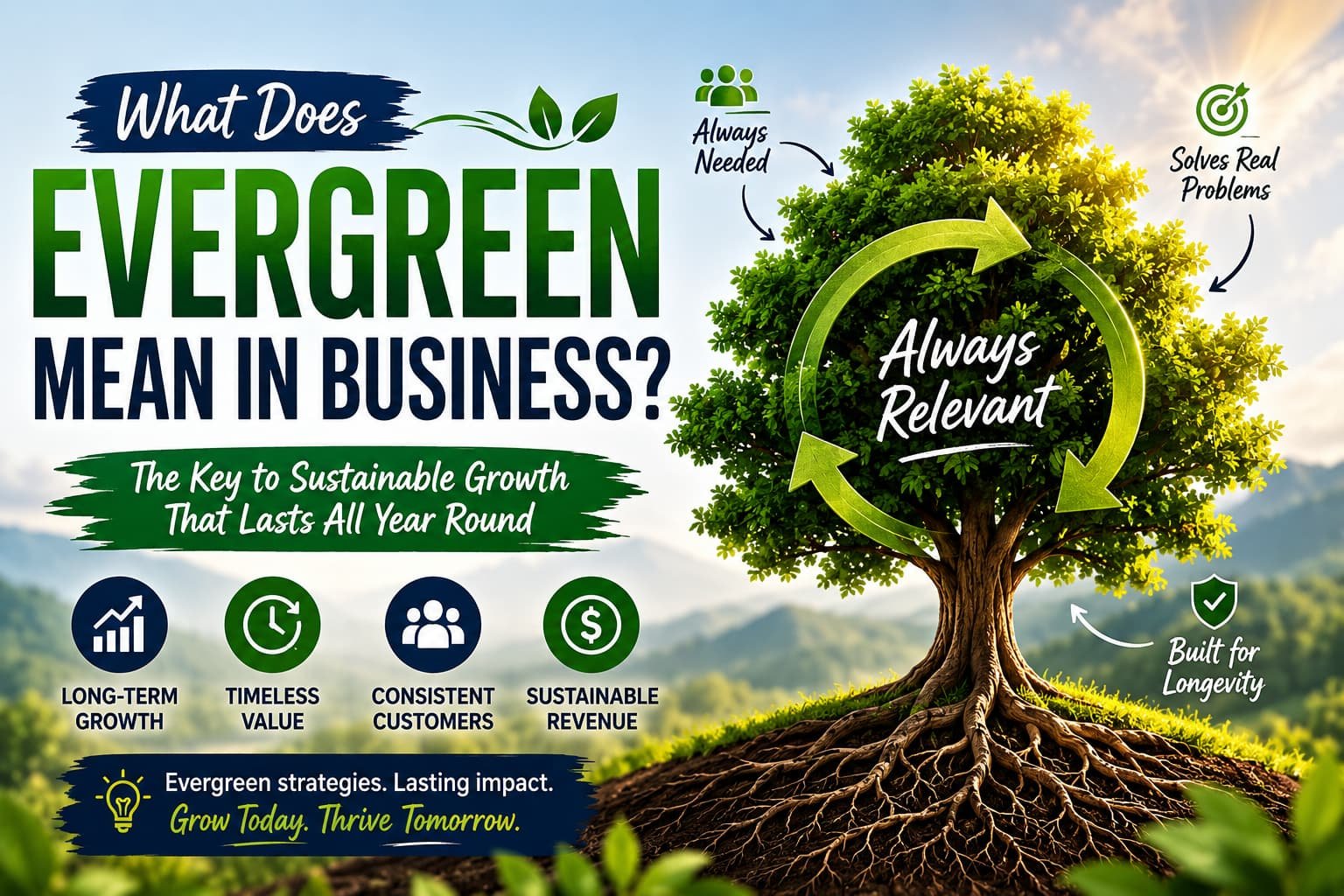
What Does Evergreen Mean in Business?
In business, evergreen refers to products, services, content, or strategies that remain relevant and valuable over a long period of time.
Unlike trend-based offerings that experience short bursts of popularity, evergreen business assets continue generating demand, traffic, leads, or revenue for years.
Think of it this way:
A viral TikTok challenge is trendy.
A guide on how to save money is evergreen.
A seasonal holiday promotion is temporary.
A software tool that solves a recurring business problem is evergreen.
The goal of evergreen business strategies is simple:
Create lasting value that continues producing results long after the initial effort.
Read More: What Is Business Days in Shipping?
Why Is It Called Evergreen?
The term comes from evergreen trees, such as pine and cedar trees, which stay green throughout the year.
Just as those trees don’t lose their leaves seasonally, evergreen business assets don’t lose their relevance quickly.
They continue serving customers regardless of trends or market hype.
Why Evergreen Matters in Business
One of the biggest lessons I’ve learned from studying successful businesses is that sustainable growth often beats explosive growth.
Many companies spend enormous amounts of money chasing short-term trends.
The problem?
Trends eventually fade.
Evergreen assets keep working.
Benefits of Evergreen Business Strategies
- Long-term revenue generation
- Lower marketing costs over time
- Consistent customer demand
- Better search engine rankings
- More predictable business growth
- Stronger brand authority
In my experience, businesses that balance trend-driven opportunities with evergreen foundations tend to perform best over the long run.
Evergreen Products in Business
An evergreen product solves an ongoing problem rather than a temporary one.
Examples of Evergreen Products
Consider these categories:
- Accounting software
- Email marketing platforms
- Fitness equipment
- Educational courses
- Productivity tools
- Insurance services
- Financial planning solutions
Companies like Shopify, QuickBooks, Microsoft, and Adobe thrive because they solve recurring needs.
People will likely always need:
- Business software
- Financial management
- Productivity tools
- Communication platforms
That’s evergreen demand.
Trend Product vs Evergreen Product
Let’s compare.
A trending fidget toy may generate huge sales for six months.
A budgeting app can generate customers for decades.
Both can be profitable.
Only one offers long-term stability.
Evergreen Content in Business Marketing
One of the most common places you’ll hear the term evergreen is in content marketing.
Evergreen content remains useful and searchable for years after publication.
Examples of Evergreen Content
- How-to guides
- Tutorials
- Beginner’s guides
- Educational resources
- Industry definitions
- Frequently asked questions
For example:
“How to Create a Business Budget”
can remain relevant for years.
Meanwhile:
“Top Marketing Trends for 2025”
has a much shorter lifespan.
Why Evergreen Content Matters for SEO
Search engines like Google reward content that consistently satisfies user intent.
Evergreen articles often generate:
- Ongoing traffic
- More backlinks
- Higher rankings
- Better ROI
This is why many successful websites invest heavily in evergreen SEO content.
Real-World Evergreen Business Examples
Let’s look at businesses that have built strong evergreen foundations.
Microsoft
Products like Microsoft Excel and Word solve ongoing workplace needs.
Businesses continue relying on them year after year.
Canva
Canva helps users create designs quickly and efficiently.
Design needs aren’t going away anytime soon.
HubSpot
HubSpot provides CRM and marketing tools that businesses need regardless of current trends.
Shopify
As long as people continue selling products online, Shopify remains relevant.
These companies aren’t built around temporary excitement.
They’re built around long-term usefulness.
Evergreen Business Models
Not every business model is equally evergreen.
Some naturally provide recurring demand.
Subscription Businesses
Examples include:
- Netflix
- Spotify
- Adobe Creative Cloud
- Microsoft 365
Customers pay regularly for ongoing value.
Service Businesses
Examples include:
- Accounting firms
- Legal services
- IT consulting
- Marketing agencies
Businesses consistently require these services.
SaaS Businesses
Software as a Service (SaaS) companies often represent the ultimate evergreen model.
They solve recurring problems while generating recurring revenue.
How to Create an Evergreen Business Strategy
Building an evergreen business isn’t about avoiding innovation.
It’s about focusing on lasting customer needs.
Step 1: Identify Timeless Problems
Ask:
What problems will still exist five years from now?
Examples:
- Saving money
- Managing teams
- Improving productivity
- Learning skills
- Staying healthy
These needs rarely disappear.
Step 2: Build Long-Term Value
Avoid creating products solely around trends.
Instead, focus on:
- Education
- Productivity
- Convenience
- Cost savings
- Problem solving
Step 3: Invest in Evergreen Content
Create resources that answer common questions.
For example:
- Tutorials
- Guides
- Resource hubs
- Knowledge bases
These assets can attract visitors for years.
Step 4: Improve Continuously
Even evergreen products require updates.
The core need remains constant.
The solution evolves.
Common Evergreen Business Mistakes
Mistake 1: Ignoring Trends Completely
Evergreen doesn’t mean boring.
Businesses should still adapt and innovate.
The key is balancing trends with long-term value.
Mistake 2: Chasing Every New Opportunity
I’ve seen businesses completely abandon successful strategies because a new trend appeared.
This often creates instability.
A strong evergreen foundation provides consistency.
Mistake 3: Neglecting Customer Needs
What feels evergreen today may become outdated tomorrow if customer expectations change.
Always listen to feedback.
My Experience with Evergreen Content
When I first started studying content marketing, I focused heavily on trending topics.
Traffic spikes were exciting.
But there was a problem.
The traffic disappeared almost as quickly as it arrived.
After comparing with my previous content strategy, I noticed that evergreen articles consistently generated visitors month after month.
Some posts continued attracting readers years after publication.
That experience completely changed how I think about business growth.
Instead of constantly chasing the next trend, I learned the value of creating assets that compound over time.
Evergreen vs Trend-Based Businesses
Both approaches have advantages.
Trend-based businesses can generate rapid growth.
Evergreen businesses often generate sustainable growth.
The strongest companies combine both.
For example:
A fitness company may create evergreen products around health and exercise while using trending social media campaigns to attract attention.
This creates both stability and growth opportunities.
Quick Tips for Building an Evergreen Business
- Focus on solving recurring problems.
- Create educational content that stays relevant.
- Build products around long-term needs.
- Prioritize customer retention.
- Invest in SEO and organic traffic.
- Update evergreen assets regularly.
- Avoid depending entirely on trends.
- Think in years, not weeks.
Signs Your Business Is Evergreen
You may have an evergreen business if:
- Customers consistently need your solution.
- Demand exists year-round.
- Revenue remains relatively stable.
- Content continues attracting traffic.
- Customers return repeatedly.
- Industry relevance isn’t tied to temporary trends.
Frequently Asked Questions
What is an evergreen business?
An evergreen business provides products, services, or solutions that remain valuable and in demand over long periods. It focuses on ongoing customer needs rather than short-term trends.
What is evergreen content in business?
Evergreen content is content that remains relevant and useful for years. Examples include tutorials, guides, FAQs, and educational resources that continue attracting traffic over time.
Is evergreen better than trendy?
Not necessarily. Trend-based strategies can drive rapid growth, while evergreen strategies provide stability. The most successful businesses often combine both approaches.
Final Thoughts
Understanding what evergreen means in business can completely change how you approach growth, marketing, and long-term success.
In my experience, the most resilient businesses aren’t always the flashiest. They’re the ones that consistently solve important problems, deliver value, and build assets that continue working year after year.
Whether you’re creating content, launching a product, building a SaaS company, or growing a personal brand, evergreen thinking can help you create sustainable results instead of constantly chasing the next big thing.
The business world will always have new trends, viral moments, and exciting opportunities. But the companies that endure are often those built on timeless customer needs.
What do you think about evergreen business strategies? Have you seen examples of businesses or content that continue performing years after they were created? Share your thoughts and experiences in the comments—I’d love to hear your perspective.