
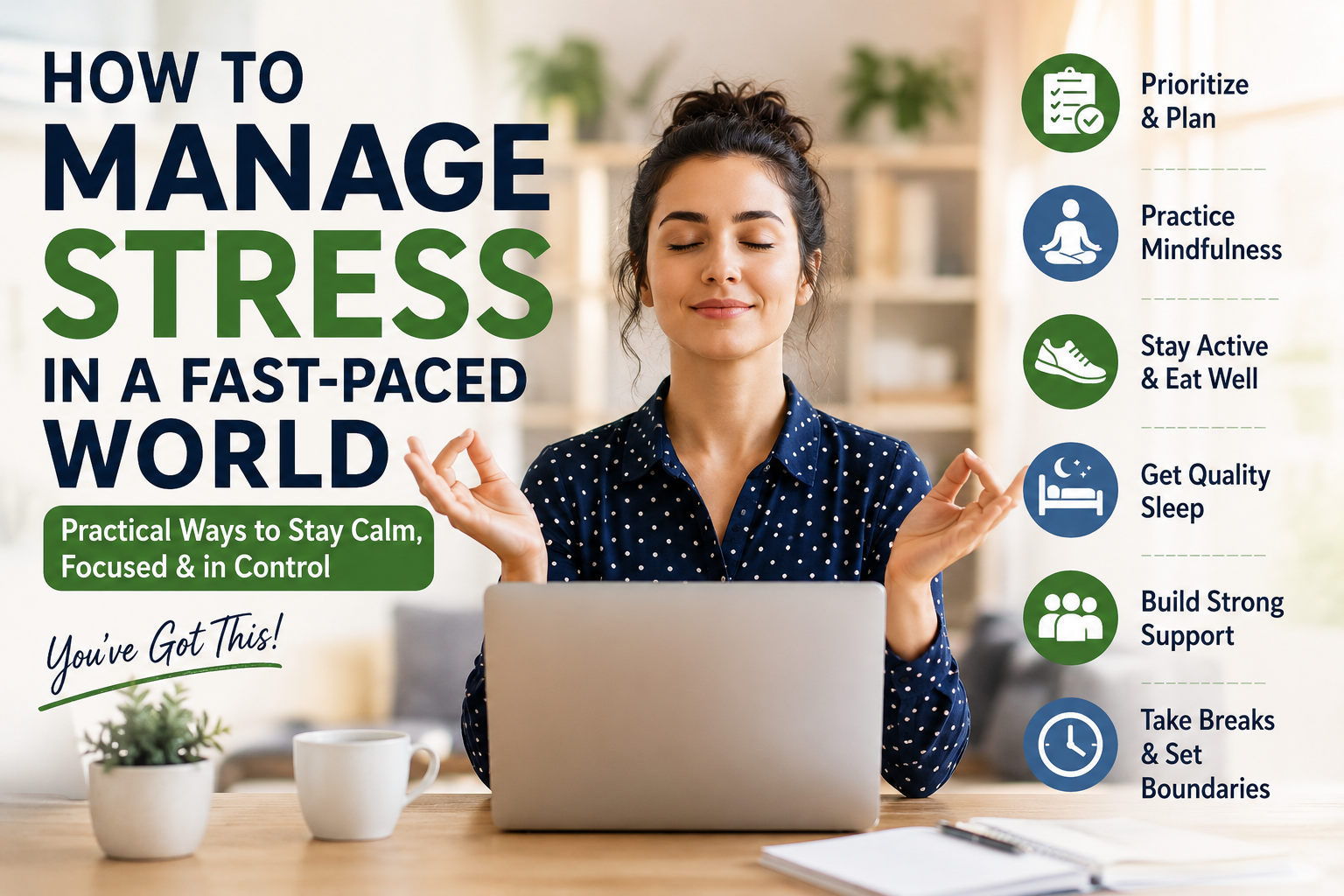
Living in a fast-paced world can feel exhausting sometimes. Between work deadlines, financial pressure, endless notifications, family responsibilities, and the constant expectation to “keep up,” stress has quietly become part of daily life for many people.
In my experience, the hardest part about stress is that it often builds slowly. At first, it feels manageable. Then suddenly, you realize you’re sleeping poorly, feeling mentally drained, losing focus, or becoming irritated over small things.
The good news is that stress management is a skill anyone can improve. Yedou do not need to completely change your life overnight. Small, intentional habits can make a huge difference in how you handle pressure, protect your mental health, and maintain emotional balance.
This guide covers practical and realistic ways to manage stress in a fast-paced environment using proven coping strategies, mindfulness techniques, better time management, and healthier daily habits.
Understand Stress and Why It Happens
Stress is the body’s natural reaction to pressure or perceived challenges. In short bursts, stress can actually help you stay alert and motivated. But when stress becomes constant, it starts affecting both physical and mental well-being.
Chronic stress may lead to:
- Fatigue
- Anxiety
- Headaches
- Burnout
- Difficulty concentrating
- Mood swings
- Sleep problems
- Emotional exhaustion
One thing I learned personally is that unmanaged stress rarely disappears on its own. It usually grows until your body forces you to slow down.
That is why recognizing stress early matters so much.
Practice Stress Awareness
Before you can reduce stress, you need to understand what is causing it.
Many people try to “push through” stress without identifying the real triggers behind it. But awareness is the first step toward meaningful change.
Common stress triggers include:
- Heavy workloads
- Financial worries
- Relationship conflict
- Digital overload
- Lack of sleep
- Unrealistic expectations
- Poor work-life balance
I once noticed that my stress levels were highest not during busy days, but during disorganized days. That realization completely changed how I approached productivity and time management.
A simple way to increase stress awareness is to ask yourself:
- What situations drain my energy most?
- When do I feel overwhelmed?
- What habits make my stress worse?
- What activities genuinely help me relax?
Even keeping a small journal for a week can reveal patterns you may not notice otherwise.
Develop Healthy Coping Mechanisms
Healthy coping mechanisms are essential in a fast-paced world. Without them, stress often turns into burnout, anxiety, or emotional exhaustion.
The key is replacing reactive habits with intentional ones.
1. Use Deep Breathing Techniques
Breathing exercises sound simple, but they genuinely work.
One technique I use often is the 4-7-8 breathing method:
- Inhale for 4 seconds
- Hold for 7 seconds
- Exhale slowly for 8 seconds
This technique helps calm the nervous system and reduce mental tension surprisingly fast.
2. Stay Physically Active
Exercise is one of the most effective natural stress relievers.
You do not need intense workouts to benefit. Even:
- Walking
- Cycling
- Stretching
- Yoga
- Dancing
can improve mood and lower stress hormones.
In my experience, movement creates mental clarity. Some of my best problem-solving moments happened during walks rather than sitting at a desk.
3. Improve Sleep Quality
Poor sleep and stress create a frustrating cycle.
Stress affects sleep, and lack of sleep increases stress.
To improve sleep quality:
- Maintain a consistent bedtime
- Avoid screens before bed
- Reduce caffeine late in the day
- Keep your room cool and quiet
- Create a relaxing nighttime routine
Even small improvements in sleep can dramatically improve emotional resilience.
4. Eat in a Way That Supports Mental Health
Food affects stress more than many people realize.
Highly processed foods, excessive sugar, and too much caffeine can increase anxiety and energy crashes.
Try focusing on:
- Fruits and vegetables
- Whole grains
- Lean proteins
- Hydration
- Balanced meals
A healthy diet supports both brain function and emotional stability.
Master Time Management and Prioritization
One of the biggest causes of modern stress is feeling overwhelmed by too many responsibilities at once.
Effective time management helps reduce that mental clutter.
Break Large Tasks Into Smaller Steps
Big projects often feel stressful because they appear impossible all at once.
Instead:
- Break tasks into smaller actions
- Focus on one step at a time
- Celebrate progress along the way
This reduces mental pressure and improves productivity.
Use Time Blocking
Time blocking is one of the most useful productivity strategies I’ve tested personally.
Instead of multitasking constantly, dedicate specific blocks of time to one task.
For example:
- 9–11 AM: Deep work
- 11–11:15 AM: Break
- 11:15–1 PM: Emails and meetings
This creates structure and reduces decision fatigue.
Use Productivity Tools
Helpful tools include:
- Trello
- Asana
- Google Calendar
- Notion
These tools help organize priorities and reduce the stress of trying to remember everything mentally.
Establish Healthy Boundaries
In a fast-paced environment, boundaries protect your mental health.
Without boundaries, stress slowly takes over every part of life.
Healthy boundaries may include:
- Saying “no” to unnecessary commitments
- Limiting overtime work
- Protecting personal time
- Reducing exposure to toxic relationships
- Avoiding constant digital availability
One lesson I learned the hard way is that being constantly available does not make you more productive. It usually makes you more exhausted.
Setting boundaries is not selfish. It is necessary.
Practice Mindfulness Daily
Mindfulness helps you stay grounded instead of mentally racing between past regrets and future worries.
You do not need hours of meditation to practice mindfulness effectively.
Simple mindfulness habits include:
- Deep breathing
- Mindful walking
- Body scan exercises
- Meditation
- Eating without distractions
Even five minutes of intentional stillness can reset your mind during stressful days.
Mindfulness also improves:
- Focus
- Emotional regulation
- Patience
- Mental clarity
Over time, it helps build emotional resilience against daily pressure.
Read More: How to Build a Sustainable Morning Routine for Better Energy
Take Short Breaks to Reset Your Mind
Many people believe nonstop work equals productivity. In reality, constant pressure usually reduces focus and creativity.
Short breaks are incredibly important.
Try taking microbreaks every 60–90 minutes.
Use that time to:
- Stretch
- Walk briefly
- Step away from screens
- Drink water
- Practice breathing exercises
I noticed my concentration improved significantly once I stopped trying to work continuously for hours without pause.
Rest improves performance.
Disconnect From Digital Overload
Modern stress is heavily connected to constant digital stimulation.
Notifications, emails, social media, and nonstop information overload can overwhelm the brain.
A few helpful digital detox habits include:
- Turning off unnecessary notifications
- Setting screen-free hours
- Avoiding social media before bed
- Keeping phones away during meals
- Disconnecting after work hours
Creating even small moments of quiet can improve mental clarity dramatically.
Build a Positive and Solution-Focused Mindset
Stress often becomes worse when negative thinking takes over.
While you cannot control every stressful situation, you can control how you respond to it.
A positive mindset does not mean ignoring problems. It means focusing on solutions rather than panic.
Helpful mindset shifts include:
- Replacing perfectionism with progress
- Setting realistic expectations
- Practicing gratitude
- Focusing on what you can control
- Learning from setbacks
In my experience, resilience grows when you stop expecting life to be stress-free and start building confidence in your ability to handle challenges.
Seek Professional Support When Needed
Sometimes stress becomes too overwhelming to manage alone.
There is absolutely nothing wrong with seeking help.
Professional support from a therapist, counselor, or psychologist can provide:
- Stress management tools
- Emotional support
- Cognitive Behavioral Therapy (CBT)
- Anxiety management strategies
- Burnout recovery guidance
Talking to someone trained in mental health can make an enormous difference.
Seeking help is a sign of self-awareness, not weakness.
Practice Gratitude and Reflection
One of the simplest but most powerful habits for emotional well-being is gratitude.
Stress naturally pushes attention toward problems. Gratitude helps shift focus toward positive moments and progress.
Simple gratitude practices include:
- Writing down three good things daily
- Reflecting on small wins
- Appreciating supportive people
- Celebrating personal growth
Over time, gratitude strengthens emotional balance and optimis
Final Thoughts
Managing stress in a fast-paced world is not about becoming perfectly calm all the time. It is about building healthier habits, stronger boundaries, and better emotional awareness so stress does not control your life.
In my experience, the biggest improvement comes from consistency rather than dramatic changes. Small daily actions, like sleeping better, taking short breaks, practicing mindfulness, and setting realistic expectations, add up over time.
Life will always have pressure, deadlines, and uncertainty. But with the right stress management strategies, you can protect your mental well-being, improve resilience, and create a healthier balance between productivity and peace of mind.
Start small. Stay consistent. And remember that taking care of yourself is not a luxury, it is a necessity.