Overview
Sir Robin Wales, former Mayor of Newham, strongly campaigned for new fixed river crossings in East London to unlock economic growth around the Royal Docks and reduce pressure on the Blackwall Tunnel. He consistently argued that bridges and permanent Ferry crossings would deliver greater transport capacity and long-term regeneration benefits than ferry-only solutions.
His campaign focused on several major priorities:
- Expanding East London infrastructure
- Improving access to jobs and development zones
- Reducing transport inequality between East and West London
- Supporting projects such as the Silvertown Tunnel and DLR extension to Thamesmead
- Encouraging Transport for London and central government to invest in fixed crossings
Sir Robin Wales frequently highlighted the imbalance between river crossings west and east of Tower Bridge, arguing that East London communities were being left behind in terms of transport investment and accessibility.
Why East London’s River Crossing Debate Matters
For decades, crossing the River Thames in East London has been a frustrating experience for many commuters, cyclists, and local residents. In my experience researching London transport infrastructure, one issue appears repeatedly: East London simply has fewer crossing options compared to West London.
Currently, there are far more pedestrian and cycling crossings west of Tower Bridge than in the eastern parts of the capital. This imbalance has created long-standing transport inequality, especially for communities living near growing development zones.
That is why proposals for three new Thames ferry crossings in East London have attracted major public attention.
The proposed electric ferry routes aim to improve connectivity for pedestrians and cyclists while supporting sustainable transport goals across London.
The Three Proposed Thames Ferry Crossings
The proposals commissioned by the Port of London Authority focus on three strategic crossing points.
Each location has been selected because of increasing population growth, housing development, and poor north-south transport links.
1. Canary Wharf to North Greenwich
The first proposed Ferry crossings would connect Canary Wharf with North Greenwich.
This area already experiences heavy commuter traffic, especially during peak working hours. A dedicated pedestrian and cycling ferry could make cross-river journeys quicker and more sustainable.
In my experience visiting both locations, the demand for better river connectivity is obvious. Thousands of residents, office workers, and cyclists move through these districts daily.
The proposal could:
- Reduce pressure on underground transport
- Encourage cycling commutes
- Improve accessibility between business districts
- Support low-carbon travel
2. Royal Docks to Charlton
The second proposal would connect Royal Docks and Charlton near the Thames Barrier.
This route is particularly important because both areas are experiencing significant regeneration and residential development.
New transport infrastructure could help:
- Unlock investment opportunities
- Support local businesses
- Improve commuting efficiency
- Encourage economic growth
Many urban planners believe transport links are often the foundation of successful regeneration projects.
Without strong infrastructure, housing developments can struggle to attract long-term economic activity.
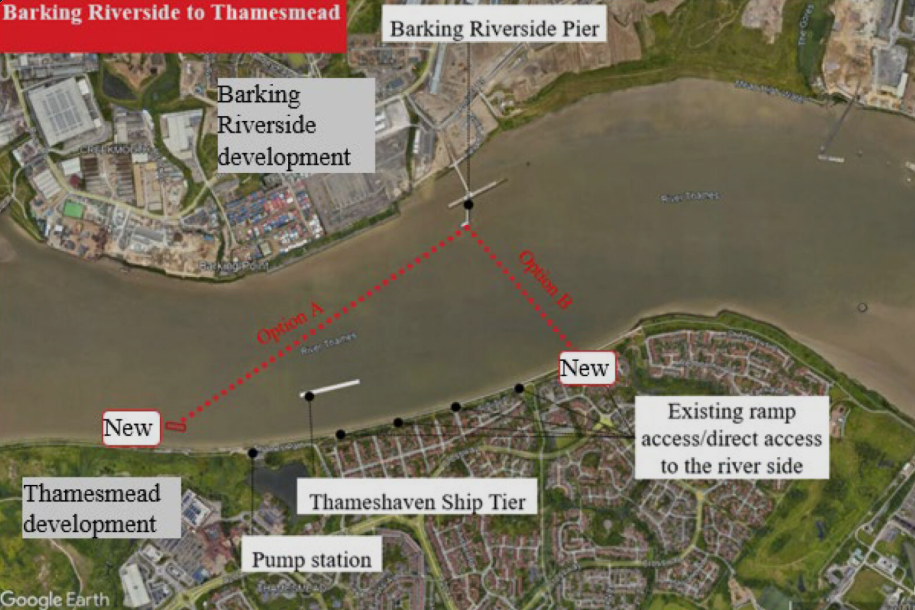
3. Thamesmead to Barking Riverside
The third proposed crossing would connect Thamesmead with Barking Riverside.
This route could become one of the most transformative because both areas are rapidly expanding residential communities.
In my experience looking at East London development patterns, this section of the river has historically suffered from poor transport accessibility.
The proposed ferry could:
- Shorten travel times
- Improve access to jobs
- Connect isolated communities
- Support future housing growth
It would also complement wider regional transport projects already planned for the area.
Why Electric Ferries Are Being Considered
One of the most interesting aspects of these proposals is the focus on electric ferry technology.
Unlike older diesel-based river transport systems, electric ferries offer:
- Lower emissions
- Reduced noise pollution
- Cleaner urban transport
- Better environmental sustainability
The proposals align closely with the Mayor of London’s long-term target for most journeys to be made through walking, cycling, or public transport by 2041.
In many modern cities, electric ferries are becoming practical alternatives to expensive bridge projects.
Cities such as Amsterdam have already demonstrated how high-frequency ferry systems can successfully support daily commuting.
The Cost Difference Between Ferries and Bridges
One of the biggest public debates surrounding the proposals is whether ferries are truly the best solution.
Some residents argue that East London needs permanent bridges or tunnels rather than additional ferry services.
Supporters of ferries, however, point to several advantages.
Why Ferries Appeal to Planners
Compared to major bridges, electric ferries:
- Cost significantly less
- Can be built faster
- Require less land infrastructure
- Cause less construction disruption
Reports estimate each ferry project could cost between £120 million and £132 million over a 30-year lifespan.
That is considerably cheaper than building large bridge structures capable of supporting heavy pedestrian and cycling traffic.
The Bridge vs Ferry Debate
The debate around East London crossings has become highly emotional because residents have dealt with transport frustrations for years.
Former Sir Robin Wales was one of the strongest advocates for fixed crossings rather than ferry-based solutions.
He argued that:
- Bridges provide permanent connectivity
- Fixed links create stronger economic growth
- Ferries offer lower transport capacity
- East London deserves infrastructure equal to West London
Sir Robin Wales repeatedly highlighted the imbalance between crossings west of Tower Bridge and those further east.
His wider transport vision also included:
- Silvertown Tunnel
- DLR extension proposals
- Royal Docks regeneration
- Improved accessibility for Thamesmead residents
In my experience studying urban transport discussions, both sides raise valid concerns.
Ferries offer speed and affordability in the short term, while bridges may provide greater long-term infrastructure stability.
Existing Thames River Transport Services
East London already has some river transport infrastructure, although many residents believe it remains insufficient.
Existing services include:
- Uber Boat by Thames Clippers
- Woolwich Ferry
- The Woolwich Foot Tunnel
However, large sections of the river still lack efficient pedestrian crossing options.
Many residents continue to complain about:
- Ferry reliability
- Long waiting times
- Limited service frequency
- High transport costs
These concerns appeared repeatedly in public discussions surrounding the latest proposals.
How New Ferry Crossings Could Impact East London
If successfully implemented, the new Thames ferry crossings could influence East London in several major ways.
1. Better Cycling Infrastructure
Cyclists would gain safer and faster cross-river routes without relying heavily on road traffic.
This could encourage:
- Healthier commuting habits
- Reduced car dependency
- Improved urban mobility
2. Economic Regeneration
Transport investment often drives local economic growth.
Improved river crossings may help:
- Increase business investment
- Raise employment access
- Support housing developments
- Attract new commercial activity
Areas like Thamesmead and Barking Riverside could particularly benefit from stronger connectivity.
3. Reduced Congestion
East London roads and tunnels regularly experience congestion, especially near the Blackwall Tunnel.
Additional river transport routes may reduce pressure on:
- Road networks
- Underground services
- Existing ferry operations
4. Progress Toward Sustainability Goals
Electric ferries align with broader environmental goals focused on:
- Carbon reduction
- Cleaner transport
- Sustainable urban development
As London continues pursuing net-zero strategies, river transport may play a larger role than many people expect.
Public Reaction to the Ferry Proposals
Public reaction has been mixed.
Some residents strongly support the idea because ferries can be introduced more quickly than bridges.
Others remain skeptical and argue that East London deserves permanent infrastructure solutions after decades of underinvestment.
Common public concerns include:
- Reliability during bad weather
- Operational costs
- Long-term scalability
- Service frequency
Meanwhile, supporters believe electric ferries offer realistic progress without waiting decades for bridge construction approvals.
In my experience, infrastructure debates often reflect deeper frustrations about regional inequality and delayed investment.
That is exactly what makes the Thames crossing discussion so important politically and socially.
Lessons Other Cities Offer London
Cities around the world already use ferries successfully as part of integrated transport systems.
Examples include:
- Amsterdam
- Auckland
- Istanbul
- Sydney
These cities demonstrate that ferry systems can:
- Reduce traffic congestion
- Improve tourism
- Support sustainable commuting
- Connect growing urban districts
London may now be entering a similar phase of river transport modernization.
Final Thoughts
The proposals for three new Thames ferry crossings in East London represent more than simple transport upgrades. They reflect a broader conversation about infrastructure equality, regeneration, sustainability, and the future of mobility across London.
In my experience researching transport development projects, successful cities are often the ones willing to rethink how people move between communities.
Whether these crossings eventually become ferries, bridges, or future hybrid solutions, one thing is clear: East London’s connectivity challenges can no longer be ignored.
As regeneration continues across areas like Canary Wharf, Thamesmead, Royal Docks, and Barking Riverside, improved river transport may become one of the most important investments shaping the capital’s future.