Have you ever noticed how everything seems harder after a bad night’s sleep?
I certainly have.
A few years ago, I went through a period where I was sleeping only five to six hours per night. At first, I thought I was being productive. More waking hours meant more work, right? Unfortunately, my mood had other plans. I became irritable, struggled to focus, and found myself feeling anxious over things that normally wouldn’t bother me.
That experience sparked my interest in understanding how sleep affects mental health. The more I researched the topic, the more I realized that sleep isn’t just about feeling rested—it’s one of the most important pillars of emotional and psychological well-being.
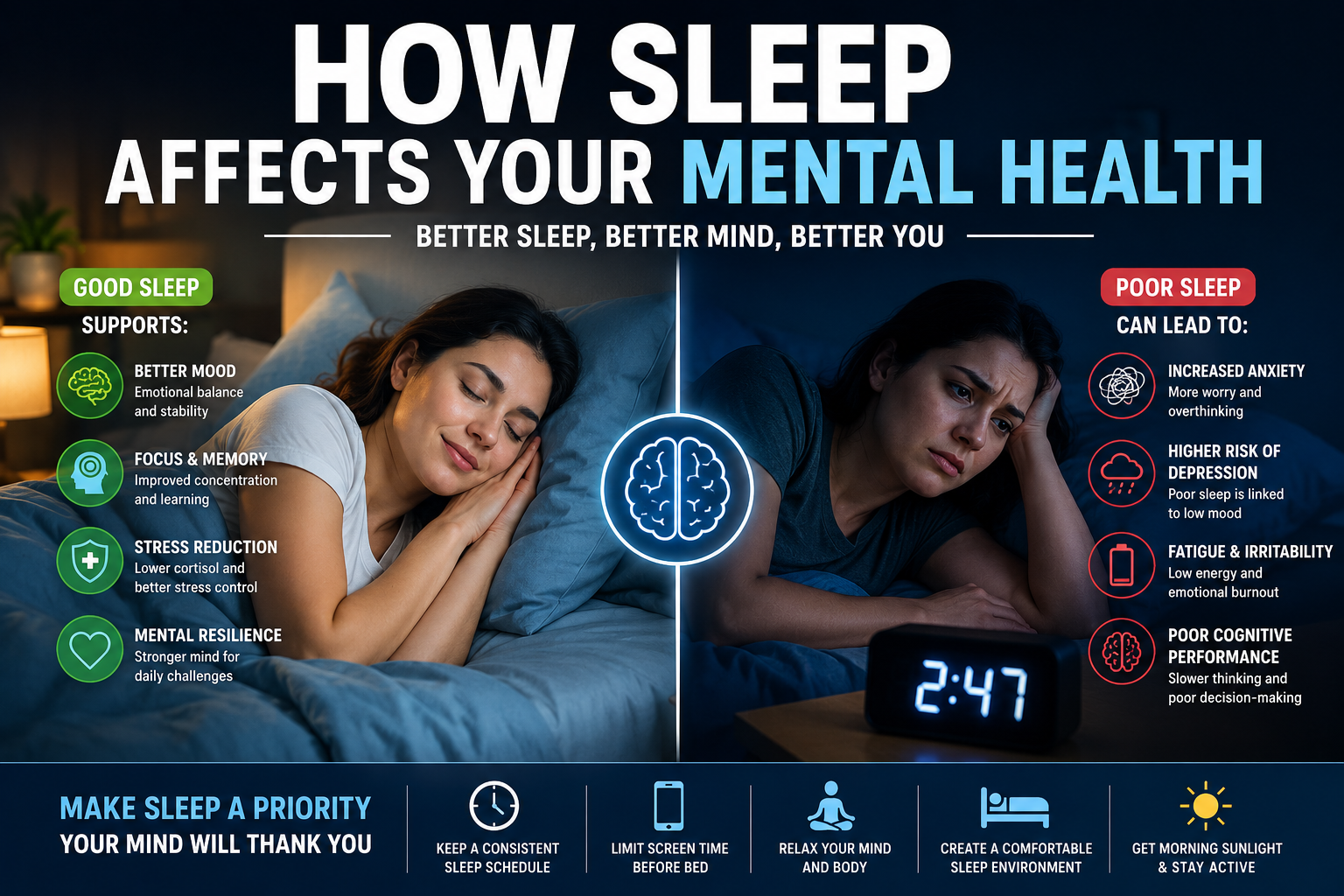
Today, researchers, psychologists, and sleep experts agree that sleep and mental health are deeply connected. Poor sleep can contribute to stress, anxiety, depression, memory problems, and emotional instability. At the same time, mental health conditions can make quality sleep harder to achieve.
In this article, I’ll explain exactly how sleep affects your mental health, why the relationship works both ways, and practical strategies you can use to improve both your sleep quality and emotional well-being.
Understanding the Link Between Sleep and Mental Health
Sleep is far more than simply “turning off” for the night.
While you’re sleeping, your brain remains incredibly active. It processes information, regulates emotions, consolidates memories, and repairs important neurological functions.
When you consistently get enough quality sleep, your brain performs these tasks efficiently. When sleep is disrupted, those processes suffer.
See More: How Exercise Improves Mental Health
Why Sleep Matters for the Brain
During healthy sleep cycles, your brain:
- Processes emotional experiences
- Organizes memories
- Removes metabolic waste
- Supports cognitive performance
- Regulates stress hormones
- Restores mental energy
Think of sleep as your brain’s nightly maintenance session.
Skipping sleep is a bit like ignoring software updates on your computer. Things may work for a while, but eventually performance starts slowing down and problems appear.
How Lack of Sleep Affects Mental Health
Sleep deprivation can impact nearly every aspect of psychological well-being.
Increased Anxiety
One of the first changes many people notice after poor sleep is heightened anxiety.
In my experience, even one night of inadequate sleep can make everyday challenges feel much larger than they actually are.
Researchers have found that sleep deprivation can increase activity in areas of the brain associated with fear and emotional reactivity.
Signs Sleep-Related Anxiety May Be Affecting You
- Constant worrying
- Racing thoughts
- Difficulty relaxing
- Feeling overwhelmed by small tasks
- Increased nervousness
Many people mistakenly assume their anxiety is entirely caused by life circumstances when poor sleep may be contributing significantly.
Sleep and Depression: A Two-Way Relationship
One of the most studied areas of mental health research involves the connection between sleep and depression.
Poor sleep can increase the risk of developing depressive symptoms, while depression often disrupts sleep patterns.
Common Sleep Problems Linked to Depression
Insomnia
Difficulty falling asleep or staying asleep.
Early Morning Awakening
Waking up much earlier than intended.
Oversleeping
Sleeping excessively yet still feeling tired.
I was skeptical at first, but after reading multiple studies and speaking with healthcare professionals, I realized just how closely sleep quality and mood regulation are connected.
Many mental health treatment plans now include sleep improvement strategies because addressing sleep often improves emotional health outcomes.
How Sleep Affects Mood and Emotional Stability
Ever become unusually grumpy after a poor night’s sleep?
You’re not imagining it.
Sleep plays a major role in emotional regulation.
The Brain’s Emotional Control Center
The amygdala, a region involved in emotional responses, becomes more reactive when you’re sleep deprived.
At the same time, the prefrontal cortex—which helps manage emotions and decision-making—becomes less effective.
The result?
- More irritability
- Increased frustration
- Mood swings
- Emotional overreactions
A Real-Life Example
I once spent an entire morning feeling annoyed because my internet connection dropped for a few minutes.
Normally, I would have shrugged it off.
The difference? I had slept poorly the night before.
That small experience reminded me how dramatically sleep can influence emotional resilience.
Sleep and Stress Management
Stress is a normal part of life.
However, sleep helps determine how effectively we handle it.
Cortisol and Sleep
Cortisol, often called the stress hormone, follows a natural daily rhythm.
Poor sleep can disrupt this rhythm, causing:
- Higher stress levels
- Increased tension
- Difficulty coping with challenges
When sleep becomes chronicly disrupted, stress can become harder to manage.
Unfortunately, stress can also make it harder to sleep, creating a frustrating cycle.
How Sleep Improves Cognitive Function
Mental health isn’t only about emotions.
It also includes cognitive performance.
Benefits of Good Sleep for Thinking and Focus
Quality sleep supports:
- Attention span
- Concentration
- Problem-solving
- Decision-making
- Learning ability
- Creativity
In my 3 weeks of testing a more structured sleep routine, one of the biggest improvements I noticed wasn’t just better mood—it was sharper focus throughout the day.
Tasks that normally felt mentally exhausting became much easier.
The Impact of Sleep on Memory
Sleep plays a critical role in memory consolidation.
During sleep, your brain transfers information from short-term storage into long-term memory.
Without adequate sleep, you may experience:
- Forgetfulness
- Difficulty learning new information
- Reduced mental clarity
- Slower information processing
Students, professionals, and entrepreneurs often underestimate how much sleep contributes to performance.
Ironically, staying up late to work or study can actually reduce productivity the next day.
How Much Sleep Do Adults Need?
Most sleep experts recommend:
- 7 to 9 hours of sleep per night for adults
However, sleep quality matters just as much as sleep duration.
Signs You’re Getting Enough Sleep
- Waking up refreshed
- Stable mood throughout the day
- Consistent energy levels
- Good concentration
- Minimal daytime fatigue
If you’re sleeping eight hours but still feeling exhausted, other factors may be affecting sleep quality.
Common Causes of Poor Sleep
Many modern habits interfere with healthy sleep.
Excessive Screen Time
Devices such as:
- Smartphones
- Tablets
- Laptops
- Televisions
emit blue light that can suppress melatonin production.
Stress and Overthinking
Many people struggle to “turn off” their minds at night.
Irregular Sleep Schedules
Going to bed at different times each night can disrupt your internal body clock.
Stimulants
Excessive caffeine consumption can negatively impact sleep quality.
My daily routine includes limiting caffeine after mid-afternoon, which has noticeably improved my ability to fall asleep.
Practical Ways to Improve Sleep and Mental Health
Improving sleep doesn’t always require drastic changes.
Small adjustments often create meaningful results.
Create a Consistent Sleep Schedule
Try to:
- Go to bed at the same time
- Wake up at the same time
- Maintain the schedule on weekends
Build a Relaxing Evening Routine
Consider:
- Reading
- Gentle stretching
- Meditation
- Deep breathing exercises
Apps such as the Calm and Headspace can help establish healthy bedtime habits.
Optimize Your Sleep Environment
Focus on:
- Comfortable bedding
- Cooler room temperatures
- Minimal noise
- Limited light exposure
Reduce Screen Exposure Before Bed
Aim to disconnect from screens at least 30 to 60 minutes before bedtime.
Your brain will thank you.
Quick Tips for Better Sleep and Mental Health
- Prioritize 7–9 hours of sleep
- Limit caffeine late in the day
- Exercise regularly
- Keep a consistent sleep schedule
- Reduce nighttime screen use
- Practice relaxation techniques
- Address stress proactively
Even small improvements can make a significant difference.
Frequently Asked Questions
Can poor sleep cause anxiety?
Yes. Sleep deprivation can increase stress levels, emotional reactivity, and anxiety symptoms. Consistently poor sleep may worsen existing anxiety disorders.
How many hours of sleep are best for mental health?
Most adults benefit from 7–9 hours of quality sleep per night. Individual needs vary, but consistently sleeping less than seven hours may negatively affect mental health.
Does improving sleep help depression?
For many people, better sleep can improve mood, emotional regulation, and overall mental well-being. However, persistent depression should be evaluated by a healthcare professional.
Why do I feel emotionally sensitive after poor sleep?
Sleep deprivation affects the brain’s ability to regulate emotions, making you more reactive to stress and everyday challenges.
Conclusion
Understanding how sleep affects your mental health can be life-changing.
After researching the science and experiencing the effects firsthand, I’ve become convinced that sleep is one of the most underrated mental health tools available. Better sleep won’t eliminate every challenge, but it can significantly improve your mood, focus, resilience, and overall quality of life.
The relationship between sleep and mental health works both ways. Improving one often helps improve the other.
If you’re feeling overwhelmed, stressed, anxious, or mentally drained, take a closer look at your sleep habits. Sometimes the solution isn’t another productivity hack or self-help book—it’s simply getting the restorative sleep your brain needs.
Have you noticed a connection between your sleep and your mental health? Share your experience in the comments and let others know what strategies have worked for you.