I still remember the first time I asked Siri a random question on my phone years ago and actually got a useful answer. It felt like magic. That moment made me realize artificial intelligence wasn’t some far-off sci-fi concept it was already quietly shaping everyday life. Then ChatGPT arrived and suddenly everyone was talking about generative AI, machine learning, ethics, and neural networks.
If you’ve ever felt overwhelmed by these terms, you’re not alone. I’ve spent time digging into this field, testing tools, and speaking with people who build these systems. In this guide, I’ll walk you through what artificial intelligence is, how it actually works, the key differences between its main parts, and why it matters more than ever. Let’s break it down together, step by step.
Understanding the Basics: What Is Artificial Intelligence?
At its core, artificial intelligence refers to a machine or computer system’s ability to perform tasks that typically require human intelligence. This includes analyzing data, learning from experiences, recognizing patterns, and making smart decisions — all guided by human input at the start.
AI goes beyond simple automation. It aims to solve complex problems and think more intuitively. You see it in virtual assistants like Siri and Alexa that answer questions, set reminders, or control your smart home. But modern AI has much broader potential to transform industries from healthcare to finance and creative work.
In my experience, the best way to understand AI is to see it as a toolbox full of different technologies. The Artificial intelligence most visible today is generative AI, like ChatGPT, which burst onto the scene and made these capabilities accessible to anyone with a computer. Suddenly, concepts like deep learning and natural language processing entered everyday conversations.
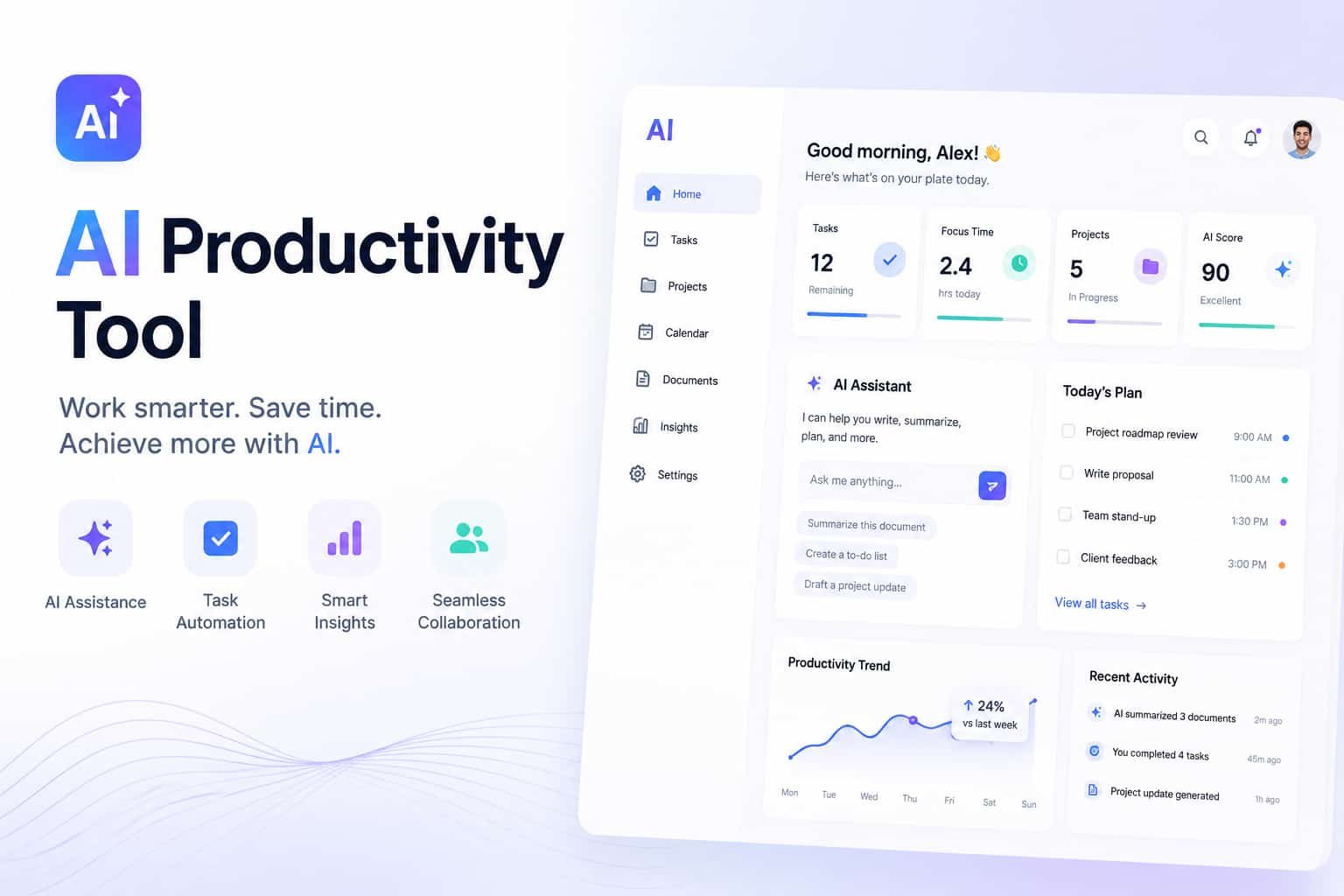
If you’re exploring how modern technology is transforming daily work, these best AI productivity tools can help you automate tasks, improve efficiency, and better understand the real-world impact of artificial intelligence.
How AI Works: A Simple Overview
AI Overview AI works by using algorithms to analyze vast amounts of data, identifying patterns to make predictions, decisions, or generate content without being explicitly programmed for every scenario. It simulates human intelligence through machine learning—specifically neural networks—which learn and improve over time based on feedback.
This video provides a simple explanation of how AI operates: How AI works in Super Simple Terms!!! by StatQuest with Josh Starmer (YouTube, 12-Jan-2026)
Here is a breakdown of how AI functions:
- Data Input: AI systems are fed large datasets (text, images, or numbers).
- Pattern Recognition (Training): Algorithms analyze this data to find correlations and structures, essentially learning by example.
- Modeling and Inference: The AI creates a “model” from these patterns to make predictions or decisions on new, unseen data, a process known as inference.
- Neural Networks: Deep learning uses layers of artificial neurons—resembling the human brain—to process complex data like speech, images, or natural language.
Key Components:
- Machine Learning (ML): Teaching computers to learn from data to predict trends.
- Deep Learning: A subset of ML utilizing deep neural networks to process unstructured data.
- Natural Language Processing (NLP): Enabling computers to understand human language.
I’ve found this framework incredibly helpful when explaining AI to friends and colleagues. It turns something mysterious into a clear, logical process.
What Is Machine Learning?
Machine learning is one of the most important building blocks of modern AI. Unlike traditional programming where you write rules for every situation, machine learning lets systems learn from data without being explicitly programmed for every outcome.
A classic example I love is spam filtering in email. The system studies thousands of spam and non-spam messages, spots patterns (certain words, senders, subject lines), and then automatically keeps junk out of your inbox.
It starts with lots of data. Algorithms train on huge datasets to identify patterns, relationships, and trends. These learned patterns then help make predictions on new data. In my testing, the quality of the training data often makes or breaks how well the system performs.
Deep Learning: Taking It Further
People often mix up machine learning and deep learning, but there’s a clear difference. Deep learning is a specialized type of machine learning that can handle more complex tasks and varied types of information.
It draws inspiration from the human brain — specifically how neurons connect and process information. This structure allows deep learning systems to make more nuanced predictions.
Think of identifying birds in photos. Basic machine learning might learn general features like wings and beaks. Deep learning goes deeper: it can recognize intricate feather patterns, shapes, and even distinguish an eagle from a pigeon with impressive accuracy. This power comes from multiple layers of processing, which is why it excels at tasks involving images, speech, and video.
Natural Language Processing (NLP): Talking with Machines
Natural language processing is the field of AI that helps computers understand, interpret, and generate human language. It powers speech recognition, text analysis, and natural conversations.
Thanks to NLP, virtual assistants like Alexa can tell you the weather, summarize news, or even answer quirky questions about orca whales. It involves several capabilities: understanding the structure of language, grasping meaning, and generating appropriate responses.
In my experience using different AI tools, advances in NLP have made interactions feel remarkably natural — though we’re still working on perfect context and nuance.
Neural Networks: The Brain Behind the Magic
Neural networks are the mathematical models that power much of today’s deep learning. They imitate the human brain with layers of interconnected nodes called artificial neurons or perceptrons.
Each neuron takes inputs, performs calculations, and passes outputs to the next layer. This hierarchical structure lets the network learn complex patterns step by step. Early layers might detect simple edges in an image, while deeper layers recognize full objects or faces.
The real strength lies in their ability to improve through training and feedback. I’ve seen this in action when experimenting with image recognition tools — the more quality data and iterations, the smarter the system becomes.
Building Responsible Artificial Intelligence
With great power comes great responsibility. AI can process enormous amounts of data in seconds, but this capability brings risks.
One major concern is bias. If trained on flawed or unrepresentative data, AI can replicate harmful stereotypes related to race, gender, religion, or background. This becomes dangerous in areas like healthcare, hiring, or law enforcement.
Privacy is another big issue. AI systems often pull data from many sources, raising questions about consent and protection of personal information. Facial recognition technology, for instance, sparks debates about surveillance and misuse.
Transparency and explainability matter too. We need to understand how AI reaches its decisions, especially in high-stakes situations. In my view, responsible AI means building systems that are fair, accountable, and aligned with human values. Organizations should focus on ethical guidelines from the beginning rather than as an afterthought.
What Is an AI Management System?
An AI management system acts like an organizational framework for handling AI projects responsibly. It includes rules, processes, and oversight to assess risks, ensure ethical use, and maximize benefits.
It covers transparency, explainability, risk management, and alignment with regulations like the EU AI Act. For companies adopting AI, having this structure helps turn powerful technology into a safe, trustworthy asset.
Standards and the Future of AI
International standards play a crucial role in guiding responsible AI development. Organizations like ISO provide globally recognized frameworks covering privacy, bias, transparency, and accountability.
Key examples include:
- ISO/IEC 42001:2023 for AI management systems
- ISO/IEC 23894:2023 on risk management in AI
- ISO/IEC 23053:2022 for frameworks using machine learning
These standards help ensure AI systems are fair, interoperable, and beneficial. They support organizations in building trust while encouraging innovation.
Why Artificial Intelligence Matters
AI already touches millions of lives daily, and its influence is growing rapidly. It can help solve complex problems in climate science, medicine, education, and accessibility. At the same time, thoughtful governance is essential so that benefits are shared widely and risks are minimized.
From my perspective, the most exciting part isn’t the technology itself but what humans can achieve when we use it wisely. AI isn’t replacing human creativity and judgment — it’s amplifying them.
Takeaways and Final Thoughts
Artificial intelligence combines data, algorithms, and brain-inspired models to perform intelligent tasks. Understanding its core pieces — machine learning, deep learning, NLP, and neural networks — helps demystify the technology. Pair that knowledge with a strong focus on responsible development, ethics, and standards, and we get AI that truly serves humanity.
My advice? Start experimenting with tools that interest you. Try ChatGPT for writing, image generators for creativity, or simple automation for daily tasks. Stay curious, ask questions about how systems work, and keep an eye on ethical practices.
The future of AI depends on informed users and responsible creators. Whether you’re a professional, student, or just curious, understanding these foundations puts you in a better position to benefit from — and shape — this transformative technology.