
Alright, let’s dive right in. If you are a US importer or a procurement manager looking for high-quality components, you’ve likely heard the buzz about China’s manufacturing might. But lately, that “buzz” has turned into a roar, specifically when we talk about aluminum die casting.
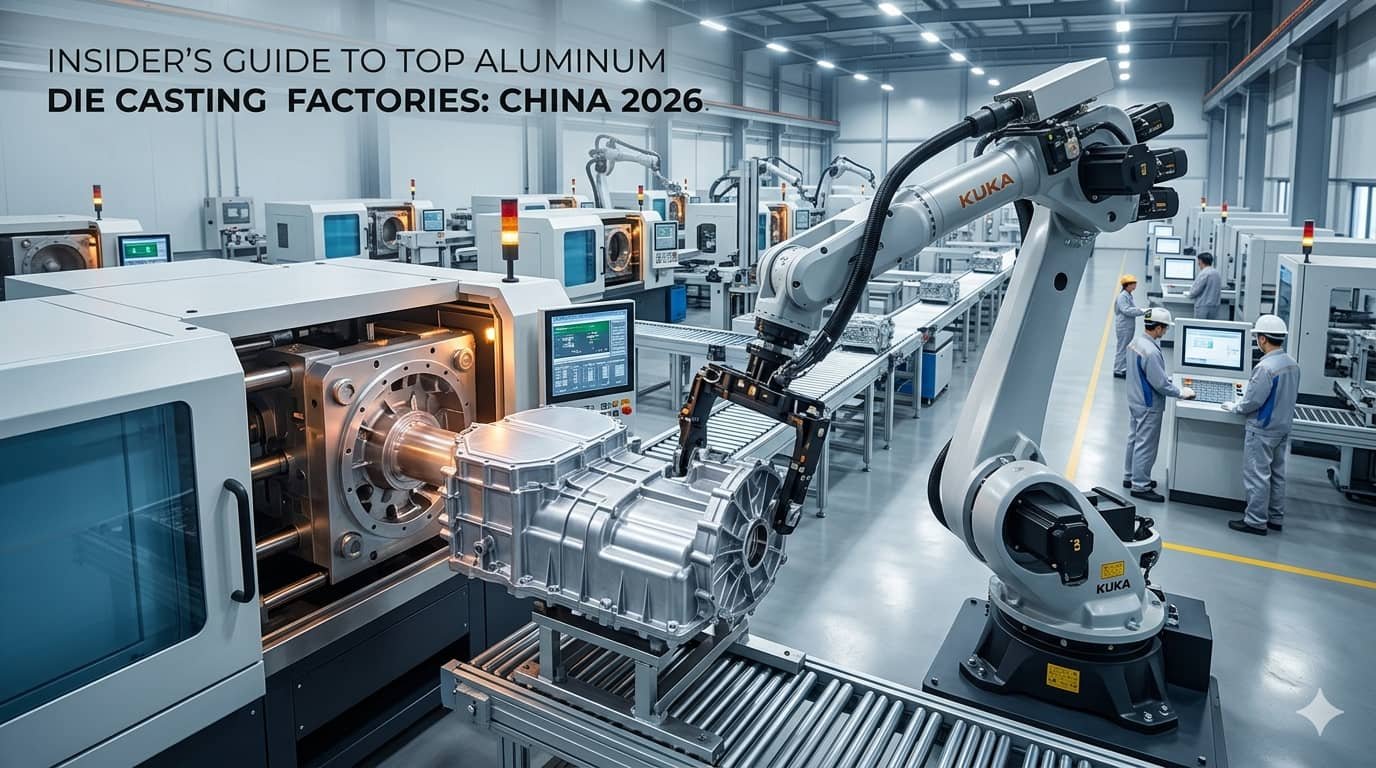
In my experience, walking through a high-end foundry in China feels less like a traditional factory and more like stepping into a sci-fi movie. I’m here to tell you that the whispers about China’s secret weapon for staying competitive are absolutely true. The value proposition from the top aluminum die casting factories in China isn’t just about “cheap parts” anymore; it’s about a level of technology, scale, and deep expertise that is frankly unbeatable right now.
The industry is currently a global powerhouse. When I looked at the latest data, I found that the sector is growing at a 7.1% CAGR, projected to reach a staggering USD 6,810 million by 2030. This isn’t just growth for growth’s sake; it’s being fueled by a global shift toward electric vehicles (EVs) and the desperate need for “lightweighting.”
Why the Industry Dominates Global Manufacturing
So, why is this sector such a goldmine for US businesses? It’s not just one thing; it’s a perfect storm of capacity and innovation.
The EV Revolution and “Giga-Castings”
The biggest driver I’ve seen recently is the EV Revolution. Because electric vehicles need to be lighter to extend battery range, manufacturers are ditching heavy steel for aluminum. China has stepped up by mastering “giga-castings” massive, single-piece aluminum components that replace dozens of smaller parts.
When you partner with these industrial powerhouses, you aren’t just buying a part; you’re buying into a system designed for this kind of high-stakes innovation. You get access to:
- Massive Scale: These aren’t just workshops; they are “metal cities” running 24/7.
- Integrated Ecosystems: Most top-tier factories have in-house tooling, design, and finishing. This “everything under one roof” approach slashes your lead times.
- Reliability: Whether you need 1,000 units or 1,000,000, these factories don’t break a sweat.
The Tech Factor: From Greasy Floors to Industry 4.0
If you still imagine old, greasy factories churning out simple metal parts, it’s time for a serious update. The technological advancements I’ve seen in Chinese facilities are mind-blowing.
Advanced Casting Methods
The leading players, such as GC Precision Mold Co., Ltd., Cixi Aida Metal Co., Ltd., and Chongqing Dajiang Millison Die Casting Co., Ltd., are no longer just doing basic pressure casting. They have fully embraced:
- Vacuum-Assisted High-Pressure Die Casting (HPDC): This removes air from the mold to eliminate porosity, making parts stronger and more reliable.
- Semi-Solid Die Casting: This allows for the production of incredibly intricate, thin-walled components that are perfect for aerospace or 5G hardware.
- Robotic Integration: In the best factories, I see 85% to 95% automation. Robotics handle everything from pouring molten metal to trimming and finishing, which eliminates human error and ensures every single part is identical.
The Real Cost-Benefit Analysis: It’s More Than the Price Tag
I often get asked, “Is it really cheaper?” The short answer is yes, but the real value lies in the Total Cost of Ownership (TCO).
Design for Manufacturability (DFM)
Because these top aluminum die casting factories have such deep engineering benches, they can often suggest slight “tweaks” to your part design. This collaborative engineering (DFM) can save you a fortune in tooling modifications and scrap rates later on.
Sustainability and Efficiency
There is also a massive shift toward sustainability. The industry is focusing on energy-saving technologies and moving from heavy metals to lighter aluminum or magnesium alloys. This isn’t just good for the planet; it reduces your shipping costs and makes your end product more attractive to modern consumers.
How to Choose the Right Partner: My Vetting Secrets
Picking a partner from a sea of options is the hardest part. If you only focus on the lowest quote, you might end up with a shipment of “paperweights” and a massive headache. Here is how I vet a potential partner.
1. The Universal Language of Quality
Certifications are your first filter. A serious contender will hold:
- ISO 9001: The baseline for quality management.
- IATF 16949: Absolute non-negotiable if you are in the automotive sector.
- AS9100: Required for aerospace-grade components.
2. Bridging the Communication Gap
It’s 9 AM in New York and midnight in Guangdong. You need an answer now. I always look for factories that provide a single point of contact who understands GD&T (Geometric Dimensioning and Tolerancing). If the salesperson can’t talk technical specs with your engineers, walk away.
3. The “Boots on the Ground” Audit
If you can’t fly there, hire a third party to check these specific things:
- The Shop Floor: Is it clean? (Look for 5S or 6S principles). A messy floor usually means messy parts.
- The Quality Lab: Do they actually use their CMM (Coordinate Measuring Machines) and X-ray machines, or are they just for show?
- The Machine Park: Check the maintenance logs of their 500T to 4000T machines. Well-calibrated machines are the key to consistency.
Mapping the Hubs: Where Should You Look?
China is a big place, and just like the US has Detroit for cars, China has specialized regions. Knowing where to look saves you time.
Guangdong: The Automotive Titan
If you need engine blocks, transmission cases, or structural chassis parts, start in Shenzhen, Dongguan, or Guangzhou. These factories have decades of experience supplying global Tier-1 automotive brands.
Zhejiang: The Consumer Electronics Expert
For sleek, thin-walled parts like laptop housings or smart home devices, Ningbo and Hangzhou are the places to be. Their supply chain is built for speed and aesthetic perfection.
Jiangsu: The High-Tech Hub
Around Suzhou and Nanjing, you’ll find factories that feel like tech labs. They specialize in 5G infrastructure, server racks, and thermal management components.
Shandong: The Heavy Hitter
For construction, mining, or agricultural machinery, Qingdao is the leader. They excel at large, heavy castings that need to withstand extreme pressure.
Final Reflections:
Navigating the landscape of China’s die casting manufacturers is a journey that goes far beyond a price-per-piece comparison. It’s about building a bridge of trust across the Pacific.
In my experience, the companies that succeed are the ones that stop looking for a “vendor” and start looking for a “strategic partner.” By leveraging the 7.1% market growth, the EV revolution, and the advanced automation found in these top factories, you aren’t just saving money, you’re future-proofing your business.
My Takeaway: The competitive advantage is real. The technology is there. The scale is unmatched. If you do your due diligence, check the certs, verify the tech, and pick the right regional hub, you can secure a supply chain that is robust, innovative, and ready to scale as fast as you are.
Now, which region sounds like the best fit for your next project?