
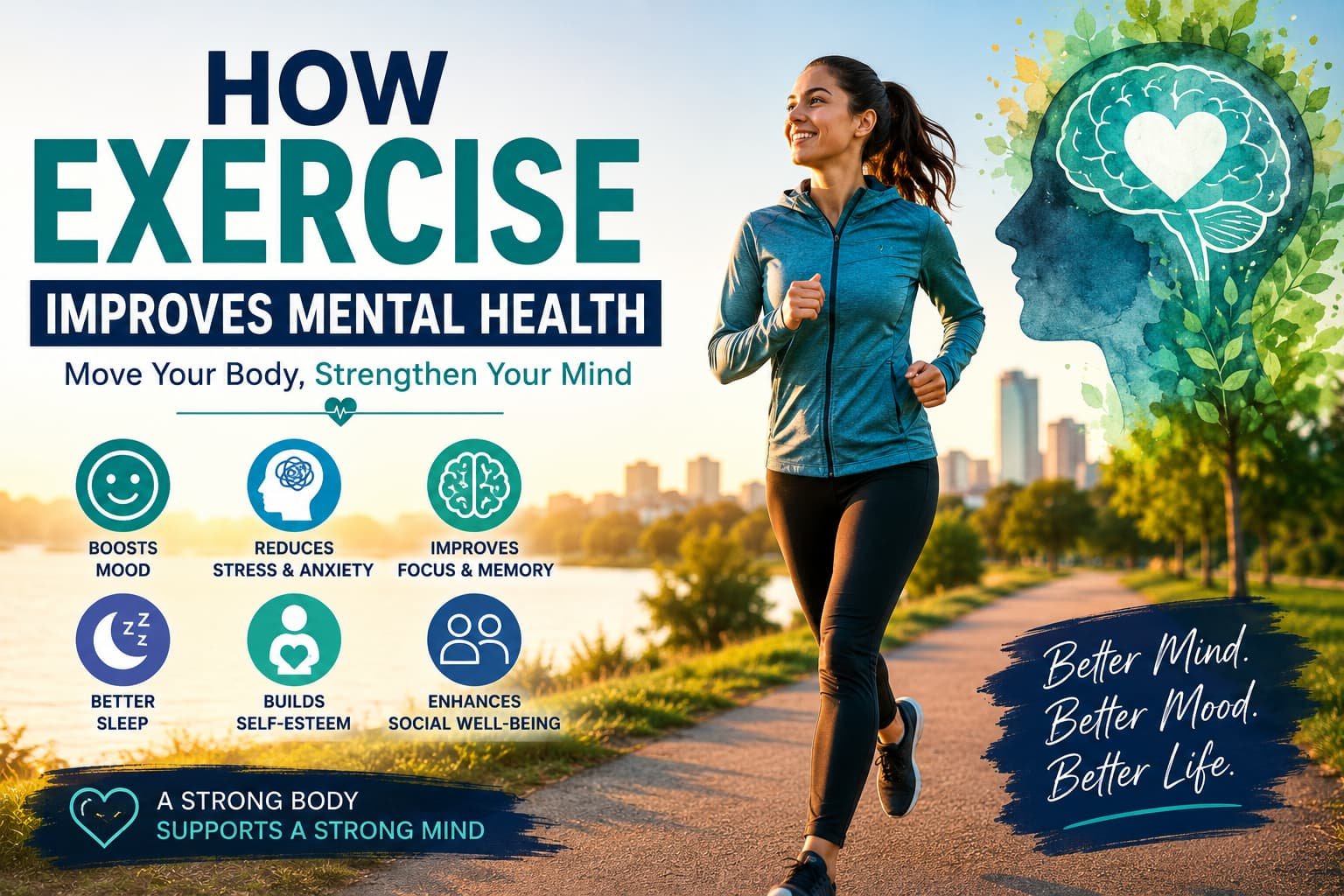
Have you ever noticed how a simple walk can completely change your mood?
I certainly have.
A few years ago, during a particularly stressful period filled with deadlines and long hours in front of a computer, I found myself feeling mentally drained almost every day. I was sleeping poorly, struggling to focus, and constantly feeling overwhelmed. I was skeptical at first, but after committing to a daily 30-minute walk, I noticed something surprising. My stress levels decreased, my mood improved, and I felt more energized throughout the day.
That experience led me to explore the connection between exercise and mental health more deeply. What I discovered is that physical activity isn’t just about losing weight or building muscle. It’s one of the most effective and accessible ways to improve mental well-being.
In this article, I’ll explain how exercise improves mental health, explore the science behind it, share practical examples, and provide actionable tips you can start using today.
Why Mental Health Matters More Than Ever
Modern life can be mentally exhausting.
Between work pressures, social media, financial responsibilities, family commitments, and constant digital distractions, many people experience ongoing stress and anxiety.
According to organizations like the World Health Organization and the American Psychological Association, mental health challenges such as anxiety, depression, and chronic stress affect millions of people worldwide.
While therapy, medication, and professional support remain important treatment options, research consistently shows that exercise can play a significant role in improving mental health outcomes.
See More: How Walking Daily Improves Overall Health
How Exercise Improves Mental Health
Exercise Triggers Feel-Good Chemicals
One of the most immediate benefits of exercise is the release of chemicals in the brain that promote positive emotions.
When you exercise, your body produces:
- Endorphins
- Dopamine
- Serotonin
- Endocannabinoids
These chemicals help regulate mood, reduce pain perception, and create feelings of happiness and relaxation.
In my experience, even a short workout can create a noticeable mood boost. It’s often referred to as the “runner’s high,” but you don’t need to run a marathon to experience it. Walking, cycling, swimming, or even dancing can produce similar effects.
What This Means for Daily Life
Instead of reaching for another cup of coffee when feeling sluggish or stressed, a quick walk around the neighborhood may provide a more sustainable mental boost.
Exercise Reduces Stress Hormones
Stress is a normal part of life, but chronic stress can negatively impact mental and physical health.
Exercise helps lower levels of:
- Cortisol
- Adrenaline
These hormones are useful during emergencies, but when they’re elevated for long periods, they can contribute to anxiety, fatigue, and burnout.
Physical activity acts as a natural stress-relief mechanism.
Think of it as pressing a reset button for your nervous system.
Exercise Improves Sleep Quality
Poor sleep and poor mental health often create a vicious cycle.
When you’re stressed or anxious:
- You sleep less.
- Poor sleep increases stress.
- Increased stress makes sleeping harder.
Exercise helps break this cycle.
Research has shown that regular physical activity can:
- Help people fall asleep faster
- Improve sleep quality
- Increase deep sleep
- Reduce nighttime awakenings
Personally, I noticed that on days when I exercised consistently, I fell asleep much more easily and woke up feeling more refreshed.
The Link Between Exercise and Anxiety
How Physical Activity Helps Reduce Anxiety
Anxiety often creates physical symptoms such as:
- Rapid heartbeat
- Muscle tension
- Restlessness
- Shortness of breath
Exercise helps train the body to manage these physical sensations more effectively.
For example, during a brisk walk or workout, your heart rate naturally increases. Over time, your body becomes more comfortable with these sensations, making anxiety symptoms feel less alarming.
Best Exercises for Anxiety Relief
Many people find these activities particularly effective:
- Walking
- Running
- Yoga
- Swimming
- Cycling
- Strength training
Yoga deserves special mention because it combines movement with mindfulness and breathing exercises.
Popular apps like Headspace and Calm often integrate movement and mindfulness techniques that support anxiety management.
Exercise and Depression: What the Research Shows
Physical Activity as a Natural Mood Booster
Depression can make even simple tasks feel overwhelming.
One of the most challenging aspects of depression is the loss of motivation.
Ironically, exercise can help break that cycle.
Studies have repeatedly shown that regular physical activity can reduce symptoms of mild to moderate depression.
Why?
Because exercise:
- Increases positive brain chemicals
- Improves self-esteem
- Creates a sense of accomplishment
- Encourages social interaction
- Reduces negative thought patterns
A Real-World Example
Imagine two people dealing with work-related stress.
Person A spends evenings scrolling social media for hours.
Person B spends 30 minutes walking outdoors.
After several weeks, Person B is more likely to report improvements in mood, energy, and stress levels because of the cumulative benefits of regular physical activity.
How Exercise Improves Cognitive Function
Mental health isn’t only about emotions.
It also includes:
- Memory
- Focus
- Decision-making
- Mental clarity
Better Brain Performance
Exercise increases blood flow to the brain, delivering oxygen and nutrients that support cognitive function.
Research suggests that regular physical activity may help:
- Improve memory
- Enhance concentration
- Increase creativity
- Support long-term brain health
In my experience, some of my best ideas come after a workout or long walk rather than while sitting at a desk.
That’s not a coincidence.
Physical activity stimulates brain regions involved in problem-solving and creative thinking.
Social Benefits of Exercise
Human Connection Supports Mental Health
One often-overlooked benefit of exercise is its social component.
Activities like:
- Group fitness classes
- Sports leagues
- Running clubs
- Gym communities
can help reduce feelings of isolation.
Many people struggle with loneliness, which can significantly impact mental health.
Exercise creates opportunities to connect with others who share similar goals.
For example, communities built around fitness platforms like Peloton demonstrate how exercise can foster motivation and social support, even remotely.
Common Mental Health Challenges Exercise Can Help Address
While exercise isn’t a cure-all, it can positively influence many common issues:
Chronic Stress
Regular movement helps regulate stress responses and improve resilience.
Low Energy
Physical activity boosts circulation and energy production.
Poor Self-Esteem
Achieving fitness goals, even small ones, builds confidence.
Lack of Motivation
Structured exercise routines create momentum and healthy habits.
Brain Fog
Movement often improves focus and mental clarity.
How Much Exercise Do You Need?
One of the biggest misconceptions is that you need intense workouts to see mental health benefits.
That’s simply not true.
A Practical Starting Point
Experts often recommend:
- 150 minutes of moderate exercise per week
That breaks down to:
- 30 minutes per day
- 5 days per week
Even smaller amounts can help.
If you’re just starting:
- Begin with 10-minute walks
- Use stairs instead of elevators
- Stretch during work breaks
- Walk while taking phone calls
Consistency matters more than intensity.
Simple Ways to Build an Exercise Habit
Step 1: Choose Activities You Enjoy
If you hate running, don’t force yourself to run.
Try:
- Walking
- Dancing
- Hiking
- Swimming
- Cycling
Step 2: Start Small
One of the biggest mistakes people make is doing too much too soon.
Start with manageable goals.
Step 3: Track Progress
Apps like:
- Strava
- Nike Run Club
- Fitbit
can help you stay motivated.
Step 4: Focus on Consistency
A 20-minute walk every day is often more beneficial than a single intense workout each week.
Quick Tips for Improving Mental Health Through Exercise
- Walk outdoors whenever possible.
- Exercise at the same time each day.
- Combine movement with music or podcasts.
- Find an accountability partner.
- Celebrate small wins.
- Focus on progress, not perfection.
- Prioritize consistency over intensity.
Frequently Asked Questions
1. Can exercise replace therapy or medication?
Not always. Exercise is a powerful tool, but severe anxiety, depression, or other mental health conditions may require professional treatment. Exercise works best as part of a comprehensive mental health strategy.
2. How quickly can exercise improve mental health?
Some people experience mood improvements immediately after exercise. More significant benefits typically become noticeable after several weeks of consistent activity.
3. What is the best exercise for mental health?
The best exercise is the one you’ll consistently do. Walking, running, swimming, cycling, strength training, and yoga can all provide meaningful mental health benefits.
Final Thoughts:
If there’s one lesson I’ve learned from researching and personally experiencing the connection between exercise and mental health, it’s this: you don’t need a perfect fitness routine to feel better.
You simply need to move.
Whether it’s a morning walk, a gym session, a bike ride, or a yoga class, regular physical activity can improve mood, reduce stress, increase focus, and support long-term mental well-being.
Start small, stay consistent, and give your body and mind time to respond. The mental health benefits of exercise aren’t reserved for athletes—they’re available to anyone willing to take that first step.