
A few years ago, I found myself in a familiar situation. I had downloaded fitness apps, bought workout gear I barely used, and promised myself that “next Monday” would be the start of a healthier lifestyle.
Spoiler alert: next Monday came and went many times.
Then something unexpected happened. Instead of chasing complicated workout plans, I started taking a simple 20-minute walk every day.
At first, it felt too easy to make a difference.
How could something as ordinary as walking compete with intense gym sessions, expensive fitness programs, or trendy workout routines?
In my experience, the answer was surprising: it didn’t need to compete. It simply worked.
Within a few weeks, I noticed improvements in my energy, mood, sleep quality, and overall fitness. The more I researched, the more I realized that walking is one of the most underrated health habits available.
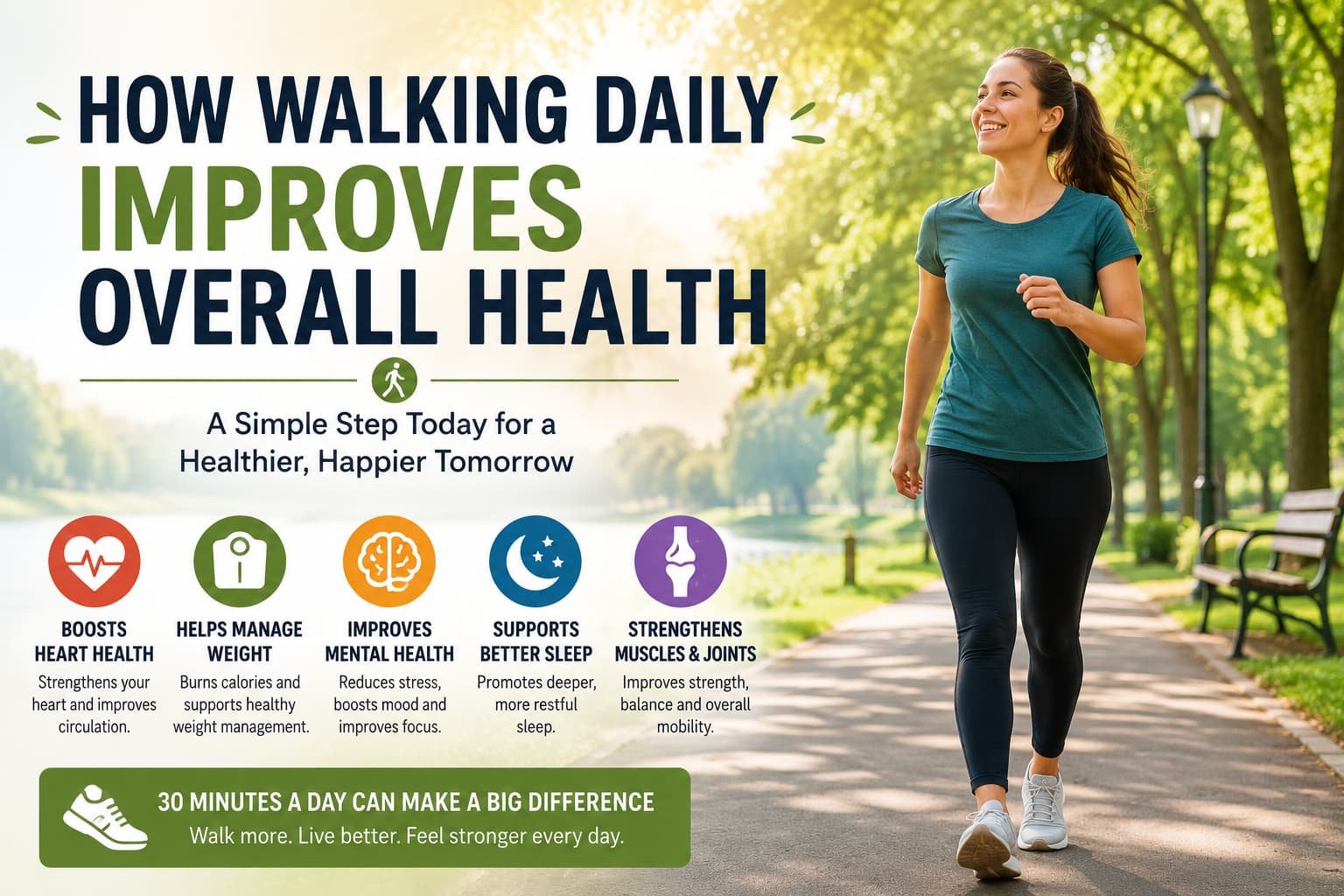
If you’re looking for a practical, sustainable way to improve your health, this article will explain exactly how walking daily improves overall health—and why it’s one of the smartest investments you can make in your well-being.
See More: How to Stay Consistent With Fitness Goals
The Science Behind Daily Walking
Walking is often viewed as basic exercise, but its effects on the body are remarkably powerful.
Health organizations around the world consistently recommend walking because it activates multiple systems simultaneously:
- Cardiovascular system
- Muscular system
- Respiratory system
- Nervous system
- Metabolic system
Unlike high-intensity workouts that may feel intimidating, walking is accessible to almost everyone.
The best part?
You don’t need a gym membership, expensive equipment, or advanced athletic ability.
Just comfortable shoes and a little consistency.
Why Walking Is So Effective
Walking is a low-impact aerobic activity.
This means it:
- Raises your heart rate safely
- Improves circulation
- Burns calories
- Strengthens muscles
- Supports mental health
Because it’s sustainable, people are far more likely to stick with it long term compared to intense exercise programs.
How Walking Daily Improves Heart Health
One of the biggest benefits of walking is its positive impact on cardiovascular health.
Your heart is a muscle, and like any muscle, it becomes stronger with regular use.
Benefits for Your Heart
Daily walking can help:
- Improve blood circulation
- Support healthy blood pressure levels
- Increase cardiovascular endurance
- Improve cholesterol balance
- Reduce heart disease risk factors
When I first began walking regularly, I noticed simple activities like climbing stairs felt easier after just a few weeks.
That’s because walking gradually trains the heart and lungs to work more efficiently.
Walking vs. Intense Cardio
Many people believe they need exhausting workouts to improve heart health.
In reality:
- Running burns more calories quickly.
- Walking is easier to sustain consistently.
Consistency often beats intensity when it comes to long-term health improvements.
Walking Supports Healthy Weight Management
One of the most common reasons people start walking is weight management.
While walking isn’t a magic solution, it can play a significant role in maintaining a healthy weight.
How Walking Burns Calories
The exact number varies based on:
- Body weight
- Walking speed
- Distance
- Terrain
However, a brisk daily walk can contribute meaningful calorie expenditure over time.
The Compound Effect
I learned an important lesson during my own health journey:
Small daily habits often outperform short bursts of extreme effort.
Walking for 30 minutes daily may seem minor, but over a year, it adds up to hundreds of miles and thousands of calories burned.
The Mental Health Benefits of Walking
This is where I noticed the biggest change personally.
Walking didn’t just improve my physical health—it improved how I felt mentally.
Walking Reduces Stress
Life can feel overwhelming.
Work deadlines.
Notifications.
Responsibilities.
Sometimes it feels like our brains have 50 browser tabs open simultaneously.
Walking helps interrupt that cycle.
Why It Works
Walking can:
- Reduce stress hormones
- Promote relaxation
- Improve emotional resilience
- Create mental clarity
Many people report feeling calmer after a walk, and I can definitely relate.
Some of my best ideas have arrived while walking rather than sitting at a desk.
Walking and Mood Improvement
Regular movement encourages the release of feel-good chemicals such as endorphins.
This can contribute to:
- Improved mood
- Reduced anxiety
- Better emotional balance
Even a short walk can help reset a difficult day.
Better Sleep Starts With More Movement
For years, I struggled with occasional restless nights.
One unexpected benefit of daily walking was improved sleep quality.
How Walking Supports Better Sleep
Walking can help:
- Regulate circadian rhythms
- Reduce stress before bedtime
- Increase physical fatigue naturally
- Support deeper sleep cycles
Many sleep experts recommend regular daytime exercise, and walking is one of the easiest ways to achieve that.
Walking Strengthens Muscles and Joints
Some people assume walking only benefits the heart.
In reality, it also supports strength and mobility.
Muscles Activated During Walking
Walking engages:
- Calves
- Hamstrings
- Quadriceps
- Glutes
- Core muscles
While it won’t replace strength training entirely, it contributes to overall functional fitness.
Joint-Friendly Exercise
Unlike high-impact activities, walking places less stress on joints.
This makes it particularly valuable for:
- Beginners
- Older adults
- Individuals returning from inactivity
Walking May Improve Brain Function
One fascinating area of research focuses on exercise and cognitive health.
Walking increases blood flow throughout the body, including the brain.
Potential Cognitive Benefits
Regular walking may support:
- Memory
- Focus
- Creativity
- Problem-solving skills
A Personal Observation
Whenever I feel mentally stuck, I often take a walk instead of forcing productivity.
More often than not, I return with clearer thinking and better solutions.
Many successful entrepreneurs, writers, and business leaders use walking as part of their creative process.
How Walking Supports Long-Term Longevity
One reason walking is consistently recommended by health professionals is its association with healthy aging.
Daily Walking May Help With:
- Mobility preservation
- Balance improvement
- Independence later in life
- Overall quality of life
Unlike extreme fitness programs, walking is something most people can continue doing for decades.
That’s an important advantage.
Common Barriers to Walking (And How to Overcome Them)
Even though walking is simple, people still face obstacles.
“I Don’t Have Time”
This is the most common challenge.
Solution:
Break walks into smaller sessions:
- 10 minutes in the morning
- 10 minutes at lunch
- 10 minutes in the evening
The benefits still add up.
“Walking Feels Boring”
I felt this way initially.
What helped:
- Listening to podcasts
- Audiobooks
- Music playlists
Apps like Spotify and Audible can make walks much more enjoyable.
“Bad Weather Stops Me”
Alternatives include:
- Indoor walking tracks
- Shopping malls
- Home treadmills
- Walking workout videos
Consistency matters more than location.
How to Build a Daily Walking Habit
The biggest challenge isn’t walking.
It’s making walking consistent.
Step 1: Start Small
Begin with:
- 10–15 minutes daily
Avoid setting unrealistic goals.
Step 2: Schedule It
Treat walking like an appointment.
Add it to your calendar.
Step 3: Track Progress
Apps that can help include:
- Google Fit
- Apple Health
- Fitbit
- Garmin Connect
- Samsung Health
Tracking progress creates motivation.
Step 4: Make It Enjoyable
Choose:
- Scenic routes
- Parks
- Waterfront paths
- Quiet neighborhoods
You’re more likely to continue if you enjoy the experience.
Quick Tips for Getting More Steps Daily
If you’re trying to increase activity levels:
- Park farther away.
- Take stairs when possible.
- Walk during phone calls.
- Take short movement breaks during work.
- Walk after meals.
- Meet friends for walks instead of coffee.
Small changes create meaningful results over time.
Frequently Asked Questions
1. How much should I walk every day for health benefits?
Many experts recommend around 30 minutes of moderate walking daily. However, even shorter walks can provide meaningful health benefits. Consistency is more important than perfection.
2. Can walking help with weight loss?
Yes. Walking contributes to calorie expenditure and can support weight loss when combined with healthy eating habits. It’s particularly effective because it’s easy to maintain long term.
3. Is walking enough exercise on its own?
For many people, walking provides excellent cardiovascular benefits. However, combining walking with strength training and flexibility exercises can create a more balanced fitness routine.
Key Takeaways
If there’s one thing I’ve learned from both personal experience and research, it’s this:
You don’t need complicated fitness routines to improve your health.
Walking is:
- Free
- Accessible
- Sustainable
- Effective
It supports your heart, mind, muscles, sleep, weight management, and overall well-being.
Conclusion
Learning how walking daily improves overall health completely changed my approach to fitness. Instead of focusing on extreme workouts or chasing quick results, I discovered the power of consistency.
A daily walk may seem simple, but that’s exactly why it works. It’s realistic enough to fit into everyday life while delivering benefits that extend far beyond physical fitness.
If you’re looking for a health habit that’s practical, affordable, and backed by both science and real-world experience, start with a walk. You don’t need perfect conditions, expensive gear, or hours of free time.