If you’ve spent any time learning SEO, you’ve probably heard experts say things like, “Build topical authority,” or “Google rewards websites with topical expertise.”
I remember hearing those phrases for the first time and thinking they sounded like vague marketing buzzwords. In fact, I was skeptical at first. I assumed SEO success was mostly about backlinks, keyword optimization, and technical fixes.
But after working on multiple websites and closely analyzing why some pages ranked effortlessly while others struggled despite strong backlinks, I started noticing a pattern. The sites dominating search results weren’t just targeting keywords—they were covering entire topics in depth.
That’s when I truly understood topical authority.
In this guide, I’ll explain what topical authority is, why it matters more than ever, and how you can build it to improve rankings, increase organic traffic, and establish long-term SEO success.
Why Topical Authority Matters in Modern SEO
Google’s mission is simple: provide users with the most trustworthy and helpful answers.
To do that, search engines don’t just evaluate individual pages anymore. They increasingly assess whether a website demonstrates expertise across an entire subject area.
Topical authority refers to the level of expertise and trust your website establishes around a specific topic.
Instead of publishing one article about SEO, for example, a topically authoritative site covers:
- Keyword research
- Technical SEO
- On-page SEO
- Link building
- Local SEO
- SEO tools
- Content optimization
- SEO audits
- Search intent
When Google sees consistent, high-quality coverage across related subjects, it begins viewing the website as a trusted resource.
That’s topical authority in action.
Read More: How to Improve Website Speed for SEO
How Topical Authority Works
Think about visiting a doctor.
If you have a heart condition, would you trust:
- A general clinic that occasionally mentions cardiology?
- A specialist heart center that focuses almost entirely on cardiovascular health?
Most people choose the specialist.
Google works similarly.
When evaluating content, search engines look for signals that indicate deep expertise within a topic.
These signals include:
Comprehensive Content Coverage
Covering important subtopics thoroughly.
Internal Linking Structure
Connecting related articles logically.
Content Quality
Providing accurate and useful information.
User Engagement
Keeping visitors engaged and satisfied.
Consistency
Publishing related content over time.
The stronger these signals become, the stronger your topical authority grows.
Topical Authority vs Domain Authority
One common misconception is that topical authority and domain authority are the same thing.
They are not.
Domain Authority
Domain authority generally refers to the overall strength of a website, often influenced by backlinks and site reputation.
Example:
A major news website may have very high domain authority.
Topical Authority
Topical authority focuses on expertise within a specific subject.
Example:
A small website dedicated entirely to SEO may outrank a large news website for many SEO-related searches because it demonstrates deeper expertise.
In my experience, I’ve seen niche websites with far fewer backlinks outperform larger competitors simply because they covered their subject matter more comprehensively.
That’s the power of topical authority.
Why Google Loves Topical Authority
Google’s algorithms have evolved significantly over the years.
Updates focused on:
- Helpful content
- User experience
- Expertise
- Trustworthiness
have all pushed websites toward becoming true subject matter resources rather than collections of disconnected articles.
When Google identifies a site with strong topical authority, it gains confidence that future content from that site will also be valuable.
This often leads to:
- Faster indexing
- Better rankings
- Increased visibility
- More keyword opportunities
It’s like earning trust with every high-quality piece of content you publish.
Real-World Example of Topical Authority
Let’s imagine two websites.
Website A
Publishes:
- Best laptops
- Weight loss tips
- Cryptocurrency guides
- Gardening advice
- SEO tutorials
The content may be good, but the site lacks focus.
Website B
Publishes:
- Keyword research guides
- SEO audits
- Technical SEO tutorials
- Link-building strategies
- Content optimization frameworks
- SEO case studies
Both sites publish an article targeting “What Is SEO?”
Which site appears more authoritative?
Most likely Website B.
Because it demonstrates expertise across the entire SEO ecosystem.
This is exactly how topical authority works.
How to Build Topical Authority
Building topical authority isn’t complicated, but it requires a strategic approach.
Step 1: Choose a Core Topic
Start by identifying your primary niche.
Examples include:
- SEO
- Digital marketing
- Fitness
- Personal finance
- Cybersecurity
- SaaS software
- Web development
Avoid trying to cover everything.
Focus creates authority.
Step 2: Create Topic Clusters
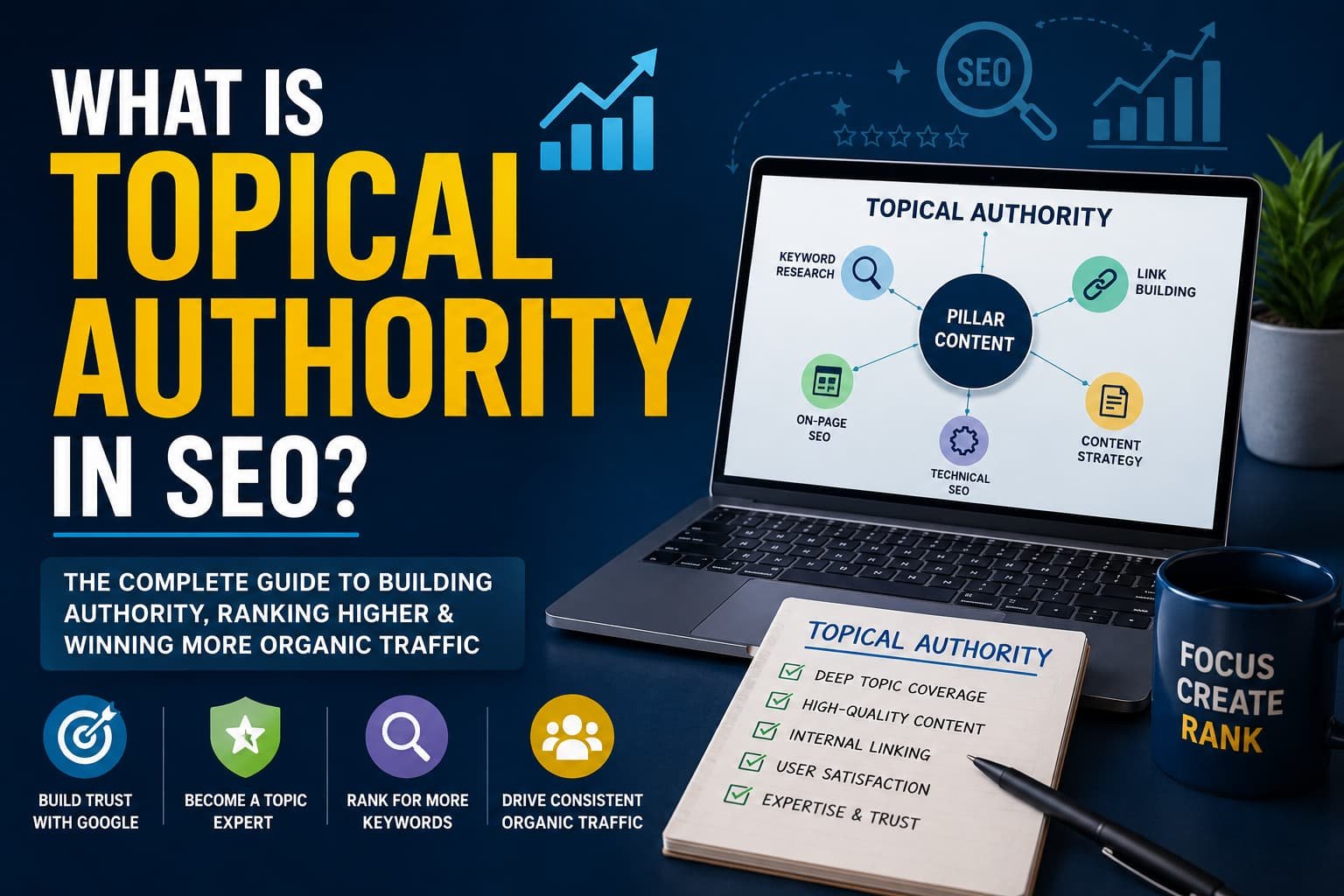
One strategy that consistently works is creating topic clusters.
A topic cluster consists of:
Pillar Content
A comprehensive guide covering a broad subject.
Example:
“Complete Guide to SEO”
Supporting Content
Related articles such as:
- Keyword research
- On-page SEO
- Technical SEO
- SEO tools
- SEO reporting
These supporting articles link back to the pillar page and to each other.
This structure helps search engines understand topical relationships.
Step 3: Cover Search Intent Completely
One mistake many websites make is publishing dozens of thin articles.
Quantity alone won’t build authority.
Instead, focus on satisfying user intent.
Ask:
- What does the user really want?
- What follow-up questions might they have?
- What problems need solving?
The more completely you answer those questions, the stronger your authority becomes.
Step 4: Strengthen Internal Linking
Internal links are often overlooked.
In my experience, improving internal linking has produced noticeable ranking improvements without creating any new content.
Effective internal linking helps:
- Users navigate your site
- Search engines understand relationships
- Authority flow between pages
Every important article should connect naturally to related resources.
Step 5: Demonstrate Real Expertise
Google increasingly values EEAT:
- Experience
- Expertise
- Authoritativeness
- Trustworthiness
One lesson I learned while working on content sites is that firsthand experience often makes content stand out.
Include:
- Personal insights
- Case studies
- Examples
- Lessons learned
- Original observations
This creates content that feels authentic rather than generic.
Tools That Help Build Topical Authority
Several SEO tools can simplify the process.
Ahrefs
Excellent for:
- Keyword research
- Content gap analysis
- Competitor research
SEMrush
Useful for:
- Topic discovery
- Site audits
- Keyword clusters
Surfer SEO
Helps optimize content based on competitor analysis.
Google Search Console
Provides valuable insights into:
- Search queries
- Click-through rates
- Ranking opportunities
Google Trends
Useful for identifying emerging topics and audience interest.
I regularly use a combination of these tools when planning content clusters.
Common Topical Authority Mistakes
Many websites struggle because they make avoidable mistakes.
Publishing Random Content
Jumping between unrelated topics weakens topical focus.
Better Approach
Stick closely to your niche.
Chasing Only High-Volume Keywords
High search volume doesn’t always mean high value.
Many low-competition supporting topics contribute significantly to authority.
Ignoring Content Updates
Outdated information weakens credibility.
Review and refresh content regularly.
Weak Internal Linking
Without strong connections between pages, search engines may struggle to understand topic relationships.
How Long Does It Take to Build Topical Authority?
This is one of the most common questions in SEO.
The honest answer is:
It depends.
Factors include:
- Competition level
- Content quality
- Website age
- Backlink profile
- Publishing consistency
In my experience, meaningful results often begin appearing within several months, but strong topical authority is usually built over time through consistent publishing and optimization.
Think of it as building a professional reputation.
Trust isn’t earned overnight.
Signs You’re Building Topical Authority
Watch for these positive indicators:
- More keywords ranking naturally
- Increased organic traffic
- Better rankings for competitive terms
- More pages being indexed
- Longer user engagement
- Growing topical visibility
Often, you’ll notice newer articles ranking faster than older ones.
That’s a strong sign that Google is recognizing your expertise.
Frequently Asked Questions
1. Is topical authority more important than backlinks?
Both matter, but topical authority can significantly improve how effectively your content ranks. In many niches, comprehensive topical coverage can help smaller websites compete against larger competitors with stronger backlink profiles.
2. Can a new website build topical authority?
Yes. In fact, niche-focused websites often build topical authority faster because they concentrate on a specific subject rather than covering many unrelated topics.
3. How many articles are needed for topical authority?
There is no exact number. What matters most is comprehensive topic coverage, content quality, internal linking, and consistency. Some niches may require dozens of articles, while others may require hundreds.
Quick Tips for Building Topical Authority Faster
- Focus on one niche initially
- Create pillar pages
- Build supporting topic clusters
- Update old content regularly
- Use strategic internal linking
- Prioritize user intent
- Publish consistently
- Demonstrate firsthand experience
- Cover related subtopics thoroughly
- Monitor performance using SEO tools
Conclusion:
If there’s one lesson I’ve learned from studying successful websites, it’s that topical authority is no longer optional. The websites that consistently rank well aren’t simply targeting keywords—they’re becoming trusted resources within their niche.
By focusing on comprehensive topic coverage, strategic internal linking, user-focused content, and genuine expertise, you can gradually build the kind of authority that search engines reward.
Rather than chasing shortcuts, think about becoming the best answer source in your niche. Over time, that approach not only improves rankings but also creates a stronger brand, better user trust, and long-term organic growth.
The goal isn’t just to rank for one keyword. The goal is to become the website people—and search engines—naturally trust when they need answers.